I used ChatGPT to write a synopsis of my ideas on how Multisense Realism can be used to reimagine physical theory so that it is not based on unproved and unprovable assumptions of the existence of unconscious, disenchanted mechanisms. It was an interesting conversation but went off the rails toward the end as GPT failed to generate an image for this post.
Integrated Overview of Fundamental Sensory Dynamics (FSD)
Core Conjecture: Fundamental Sensory Dynamics (FSD) asserts that what conventional physics labels as mass, energy, fields, and forces are not ontologically fundamental. Instead, they are abstractions masking a deeper reality constituted by the interplay of Sense and Motive—the irreducible qualities of conscious experience.
Sense as the Ontological Primitive
Universal Qualia as Reality: In FSD (and Multisense Realism), there is no separate “data” to be transduced by sense organs. Rather, the appearance of qualia—the vivid, intrinsic qualities of experience—is the sole ontological manifestation of existence.
Role of Sense Organs: Instead of generating data that is later “converted” into experience, sense organs in this framework serve to limit, filter, lens, focus, and/or amplify these fundamental sense appearances. They mediate transitions between different scales of conscious experience—for instance, from microphenomenal (the most elemental level) to phenomenal (the level of personal, vivid experience), or from a universal (holophenomenal) to a more localized, differentiated (multiphenomenal) mode.
Diffractivity over Emergence: Inverting the conventional assumption of emergence, FSD replaces it with the concept of divergence or diffractivity (cf. Craig Weinberg), suggesting that what appears as emergent complexity is instead the natural divergence of universal qualia into a structured hierarchy of experiences.
Motive as the Dynamic Primitive
Replacing “Energy” with Motivational Qualities: FSD replaces the classical concept of energy with intrinsic motivational qualities inherent in conscious experience. What is traditionally described as a “force” is reinterpreted as an aesthetic prompt—a qualitative influence that appears within experience.
Internalizing the Prompt: The detected prompt in a conscious experience is not a mere external push; it is internalized, and its transformation into a motive prompt depends on the conscious awareness of the possibility for motor response. This is not a simple mechanical push but a dynamic interplay of aesthetic qualities.
Example in Human Experience: Consider music: it is experienced as rich aural qualia that evoke motivational or emotional qualities. The intensity and character of these motivational impressions, combined with an intrinsic awareness of the capacity for physical movement (e.g., dancing), yield semi-intentional motor responses. This dual aspect reflects the interplay between personal/phenomenal levels and the underlying subpersonal/microphenomenal layers of conscious experience.
Reinterpreting Conventional Constructs
Mass, Fields, and Forces: Rather than being inert, geometric quantities, mass and conventional fields (electromagnetic, gravitational, etc.) are re-envisioned as convenient mathematical descriptions of the constraints or limitations on the free expression of sense and motive. For example, the vacuum permittivity and magnetic permeability can be inverted in this paradigm to reflect the degree to which the fundamental context of universal qualia is obstructed or diluted. The speed of light, then, is not merely a velocity limit but a measure of the unobstructed propagation of sense and motive.
Quantum Phenomena Revisited: Quantum entanglement, contextuality, and superposition are recast as reflections of holistic sensory-motive dynamics. Instead of invoking probabilistic or multiverse interpretations, these phenomena are understood as manifestations of a participatory, aesthetic dynamics underlying all interactions.
Summary of the Revised Conjecture
FSD contends that the cosmos is not built from inert, quantitative constructs but from a fundamental substrate (really just ‘strate’) of conscious experience. In this view, what we interpret as mass, energy, fields, and forces are heuristics that describe how universal qualia (Sense) and their intrinsic motivational qualities (Motive) interact. The observed limitations on the propagation of these influences—traditionally expressed as permittivity, permeability, and the speed of light—are reinterpreted as measures of how sense and motive are modulated, filtered, or obstructed by physical forms.
Concise Summaries
1. Common Sense Description: “Fundamental Sensory Dynamics proposes that the universe isn’t built from inert stuff like mass or force but from a deep layer of experience. Instead of external energy pushing matter, what we see as fields and forces are actually the result of universal sense appearances and their inherent motivational qualities, which are filtered and expressed by our sense organs. This view turns traditional emergence on its head, suggesting that our experiences diverge from a unified, fundamental consciousness rather than emerge from lifeless matter.”
2. Academic Description: “Fundamental Sensory Dynamics is a conjectural framework positing that the canonical physical constructs of mass, energy, fields, and forces are emergent abstractions overlying a more primitive substrate: universal qualia and their intrinsic motivational dynamics. In this paradigm, sense is not the transduction of external data but the direct manifestation of experience, while traditional energy is reinterpreted as motivational influence. Conventional parameters—such as permittivity, permeability, and the speed of light—are reformulated as measures of the modulation and transmission of sensory-motive interactions. This approach inverts emergentist assumptions by framing complexity as divergence (or diffractivity) from an absolute, holistic experiential field.”
0:51 What’s down there? 0:54 The laws of fundamental physics, quantum mechanics, 0:57 perhaps string theory below that, 0:59 perhaps a final theory of everything, 1:01 the holy grail of science. 1:04 I see a challenge to this model of how the world works. 1:08 It’s called Strong Emergence. 1:10 And it claims that each level of the hierarchy of the sciences 1:15 from physics to chemistry to biology to psychology 1:18 has its own special laws.
Right away I have problems with the assumptions being made here. Physics, chemistry, and biology may have their own special laws, but they are laws about physical, concrete, tangible phenomena, not feelings, perceptions, ideas etc. In the list “physics to chemistry to biology to psychology” one of these is not like the other. If psychology had laws, they would pertain not to organs, cells, or molecules but to aspects of conscious experience where no tangible object appears at all.
2:40 George, the claim that has been growing is that 2:44 in order to explain how everything works, 2:47 you need this concept of emergence. 2:49 Okay. Well, let’s ask the following question. 2:52 If we knew everything about what was the state of the universe 2:57 at the time of the last scattering 2:59 of the cosmic microwave background of matter. 3:02 Which is basically 14 billion years ago, 3:04 could you predict what you and I are saying 3:07 to each other today from that data? 3:09 Some of the strong physicalists believe that, that would be 3:12 the case and I think it’s absolutely clear that 3:15 there it isn’t remotely possible this would be the case, 3:18 because the fluctuations on the surface of the last scattering, 3:21 if you believe standard cosmology 3:23 or random Garcia fluctuation. 3:25 Now, out of that, emergence has taken place over time 3:28 of animals, of human beings are able to think. 3:33 And human beings then can discuss and produce books 3:36 like Einstein’s Theory of Relativity, 3:39 Darwin’s book on the origin of the species, okay. 3:42 Now, those books contain logical argumentation. 3:47 There is no way that logical argumentation was implied 3:51 in any sense by that data 3:52 on the cosmic microwave background surface. 3:55 Something has happened between there and there 3:57 which has led to that logical argumentation appearing 4:01 in the real world which it has undoubtedly has done. 4:04 On its surface, that’s correct. 4:07 But what I could do is I can throw in an evolutionary picture 4:10 and then it would develop the nervous system and the brain. 4:13 And then you have interactions between brains 4:15 and communities and I can give a story. 4:18 Yes, but the physics does not come into that story, 4:22 in any way, except facilitating what, what — 4:24 you’re bringing in a Darwinian picture. 4:26 No physics book has got Darwin’s law as a law of physics. 4:29 Sure. Sure. 4:30 No physics books has got a law, has got the Hodgkin Huxley 4:34 equations as a law of physics. 4:35 They are imagined. 4:37 But those rules or laws or understandings came out of 4:41 a mechanism of the brain that somebody came up with.
That last line is a good example of how much the idea of emergence is based on circular reasoning. To say that understanding is a mechanism of the brain assumes the conclusion that emergence is supposed to be explaining. We do not actually know that any such mechanism exists in the brain, only that we can see certain correlations between our direct experiences and our perceptions of activity in the brain through imaging devices. Any direction of causation from brain to experience is being inferred by our preference, not compelled by an understanding of how or why experiences emerge from unexperienced brains. The fact that a brain is itself a part of our experience is overlooked, as is the possibility that such images and appearances of brains could be generated by, for, and within conscious experience.
4:44 And in some ultimate analytical sense, you could describe how 4:50 those ideas came, in terms of something in the physical world. 4:53 Unless the claim is that at some levels, there is something 4:59 that is absolutely non-reducible to the physical. 5:03 The claim is that through some of the processes you indicated, 5:08 many of which are not physical, 5:10 although they’re allowed by the physics. 5:11 Brains came into being which are able to carry out 5:14 logical argumentation as an argumentation 5:17 at the psychological level. 5:19 And that argumentation is what leads to, for instance, 5:23 E to the I pi plus one is equal to zero 5:26 being written down on a piece of paper. 5:28 The physics knows absolutely nothing about that. 5:30 You have to have the emergence of the possibility 5:33 of logical argumentation to take place. 5:36 That logical argumentation then has the possibility 5:38 of controlling what appears on the piece– 5:41 So, so, okay. 5:42 But you’re not requiring anything of a non-physical 5:45 nature here at this point, or are you? 5:47 I am. An idea is a non-physical thing. 5:51 An idea is realized in the brain 5:53 but the idea itself is not a physical thing. 5:56 Okay. 5:57 Now everything we see around us here, basically, except for 6:00 the trees was designed by the human mind. 6:03 So, the mind is coarsely effective and thoughts 6:06 are coarsely effective but a thought is not a physical thing. 6:09 It’s realized in a physical way 6:10 but it is not of itself a physical thing.
At this point, I agree with George at least on one thing – that indeed ideas are not physical or reducible to the physical, unless we dilute the term physical so much that it really includes anything and becomes meaningless. I disagree, however with the assertion that “An idea is realized in the brain“. Introducing this term realized carries with it the full weight of physicalist bias, rolling right over the Explanatory Gap and Hard Problem and making the same mistake that Galileo and Locke made by pronouncing physical/extended properties “Primary” and everything else Secondary.
Physically, we see no process of realization, whatever that might mean, inside of the tissues of a brain. We see cells, fluids and molecules moving around. If we use physical instruments to bounce electromagnetic force off of the water in the brain we can read into those movements other geometric patterns of activity, but that activity, as far as science is concerned, is purely quantitative change in the way that charge/polarity is distributed. There’s nothing more likely to emerge from the Magnetic Resonance of water in the brain than any other physical property of any organ. It’s all just visual geometries overlaid onto molecular movements over time.
We now have two filler terms, emergence and realization, to smuggle in unscientific, non-explanatory fictions into physics and conscious experiences that create a false bridge between them, doing unspecified non-physical things in both directions. In reality, we have not established or explained anything, only added abstractions to hide our ignorance and make ourselves feel clever. The explanatory gap remains as dualistic as ever, with Physics, Chemistry, Biology, brains, and ‘realization’ back in the Cartesian Res Extensa realm, and Psychology, ideas, emergence, eiπ +1=0, and logical argumentation firmly in Res Cogitans.
Also mentioned by this point is the seductively innocuous term level: “at the psychological level“, “at some levels, there is something that is absolutely non-reducible to the physical.” This idea of levels is itself completely non-reducible to the physical. It is an idea about our typical ranges of perception. Physical phenomena, if they could exist independently of all detection and perception, would have no levels. Every scale from the Planck to the Cosmological would exist in the same ‘level’ and there would be no other. Physics would not get blurry vision trying to focus on a grain of sand or have to move its head to see all of the Milky Way. Everything would just exist as it is – particles unable to detect each other in any way. Nothing to aggregate or sum instantaneous events into linear time durations. Nothing to make novel geometric wholes appear (invisibly? intangibly?) from scale-dependent perceptual appearances of adjacency of parts. We all know that at the particle scale the ratio of particle to space is incredibly minute, and there is no particular reason to lump those particles together into the shapes that happen to be visible in human perception.
6:13 The idea exists and it has its own validity 6:17 but it is only realized 6:20 because of the physical things going on below? 6:23 I mean, if there’s nothing else. 6:25 Unless you’re saying that the laws of physics, 6:27 when they get to a certain level, create thing that 6:30 in principle can never be understood 6:32 by the microphysics laws. 6:34 Well, it can’t be understood. 6:35 You can’t understand E to the I pie plus one is equal to zero 6:39 in terms of maxual decrays [ph] and interacting electrons. 6:41 I think that’s pretty obvious. 6:43 You can’t understand it at that level. 6:44 You can’t understand that at that level, that’s right. 6:48 But ultimately, that’s the only way it’s realized in terms of– 6:51 No, no. That’s just the way it’s realized, yes. 6:53 So, you’ve got multiple levels. 6:55 You’ve got the atomic level. 6:57 You’ve got the molecular level, you’ve got the systems level. 6:59 All of these are simultaneously causations taking place 7:02 simultaneously, and all of them, in such a way, 7:05 that the logical thing can be worked out. 7:07 But it’s the logic which is driving what happens. 7:10 It’s the physics which enables it to happen 7:12 but the logic is deciding the outcome. 7:15 So, you have what would be downward causation? 7:19 – Downward realization. – Downward realization. 7:22 So, what’s the difference between causation 7:23 and realization? You didn’t like my word causation? 7:25 I’ve been persuaded recently, different from what I’ve written 7:28 about before, that causation is always horizontal. 7:32 Emergence is vertical, and realization is downwards. 7:35 Oh, yeah. That, that I can, I can understand that. 7:38 I’m just trying to think this out, 7:40 get me wherever you want to get me.
In this section, amidst more discussion of levels and realization are more physicalist assumptions that are treated as a priori givens: “But it’s the logic which is driving what happens. It’s the physics which enables it to happen, but the logic is deciding the outcome.” Nobody can claim to know that this is true. We know that when we observe physical phenomena and physical instruments, and then analyze those observations with certain mechanistic modes of sense-making, we can tell causality stories that make sense. We do not, however, know that what we imagine is driving those stories is the only driver of causality, or indeed if it is even correct that it is physical appearances that are doing more enabling than the non-physical appearances. If the universe were nothing but logic and physics, there would not even be a way for any part of such a universe to conceive of any alternative. Logical and physical would describe everything, so the words would be meaningless.
We do not live in a universe like that. In our universe, logic and physics are but a small portion of what we experience. If anything emerges from that, there is so much more of it that it is hard to justify seeing the physical as the realizer and the perceptual as the emergent. Even under physicalism, we literally have no experience of anything other than perceptual phenomena. If the physical objects we perceive exist beyond all perception, we will never be able to access it except as inferences from our intellect (what noumena actually refers to, etymologically).
7:42 Well, what is useful as a computer is an analog 7:46 and when a computer, for instance, sorts a list of names, 7:49 you feed in a program at the top and an algorithm 7:53 is changed down through a series of virtual machines 7:56 to the bottom level, by compilers and interpreters. 7:59 And that’s the machine language at the bottom. 8:01 The machine language does it and then it goes up again 8:03 and what you fed in at the top, results in the list 8:06 being printed out. 8:08 The electrons flowing the gates enable it to happen 8:10 but it’s the algorithm which has decided 8:12 what will, in fact, happen. 8:14 But the algorithm is represented ultimately 8:16 in terms of the transistors and… 8:19 Correct. And at this level, it’s the laws of — 8:22 it’s Maxwell’s equations, and Newton’s equations 8:24 at this level. But at this level, 8:26 it is the logic of the algorithm which is deciding 8:29 what will happen at that level and ultimately, it’s that 8:32 which decides which electrons will flow through 8:35 which gates at the bottom level. 8:36 It’s the top level decides what will be done 8:39 and the lower levels carry out the work.
At this point, the argument really loses all grounding in physics and succumbs entirely to a cartoon workflow from top level non-physical algorithms to bottom level physical semiconductor components and back. All of these claims are false:
“that’s the machine language at the bottom“ “it’s the algorithm which has decided“ “But the algorithm is represented ultimately in terms of the transistors“
Any sort of language is a feature of how we understand and communicate consciously. Physics, if it could exist independently of consciousness, would not need a language, it has fundamental forces and statistically inevitable recombinations to do all of the ‘deciding’. Electromagnetism, not algorithms, are opening or closing gates. Transistors can have no inkling of any grand logic inscribed by human programmers in some non-physical never-never layer. They don’t need logic.
Microphysical behavior is the same regardless of whether or not they are grouped together in some semiotic schema. Those behaviors – which are nothing but the movement of particles relative to each other, do not represent anything. They are not terms in an algorithmic language. The machine components have no access to any other level or layer. Their presence is a purely tangible-haptic geometric-dynamic fact. Not only would other levels have no functional role in influencing electromagnetism, electromagnetism has no physical way to be influenced by them. It’s the interaction problem of Dualism. The only ghosts in the machine that physics allows are physical ghosts like charge, mass, and spin. Nothing physical is summing them up or transforming them into non-physical ‘seemings’.
As far as the connection between Machine language and Machine goes, I have discussed here why it does not survive causal closure, and is in fact just another infinitely broad explanatory gap between abstract logical concepts and concrete physical objects.
8:41 So, let me ask this question. 8:43 We know the H2O is water. 8:45 If I gave you some gas of hydrogen, 8:47 gas of oxygen and hydrogen, could you ever predict 8:50 that if you got a lot of it together, it would be wet? 8:53 No. The answer is no, you can’t. 8:55 This is one of the problems with– 8:57 Okay. So, I think there are people who say that you can. 9:00 Well, alright. Let me, let me– 9:01 Because you — when you know that the angle 9:03 between the hydrogen and the oxygen, 9:05 then you can put a lot together, you can see how they would slip, 9:07 and how wetness could occur. 9:09 There is a great problem in deriving the macro properties 9:12 of waters from the micro properties. 9:13 But let me make the following statement. 9:15 By the time you’ve done that, the hydrogen atom 9:18 no longer exists as a hydrogen atom. 9:20 It only exists as a water molecule. 9:22 So, the lower level no longer exists 9:24 as the individual entities. 9:25 They’ve got incorporated at a higher-level interchange. 9:27 Okay. But if you knew everything about 9:29 the hydrogen and the oxygen you should be able to predict 9:32 the wetness of water if you have it in groups? 9:35 You should. In the case of water, in principle, absolutely. 9:38 You can do that.
This popular example of emergence is another example of circular reasoning fouling up our understanding. What we experience as water has different aspects – in the visible sense, we see images of familiar blue colors, transparency, and shapes like waves and droplets, clouds, mist, etc. In the aural sense, we hear familiar splashing and bubbling, tidal waves crashing, sounds of pouring and spilling onto solid matter. There are flavors and odors that we associate with water also. All of these qualities can and are experienced regularly in ordinary dreams and imagination. If this is water, it is not physical.
H2O refers not to the water that we experience, but to a molecular arrangement that makes sense to us intellectually within the context of chemistry that can be applied to accurately predict and control many of the experiences in our waking consciousness of physical qualities. These are not necessarily different from dream qualities, as dreams can be quite exhaustively realistic, even under deliberate lucid inspection, however we can agree that while we are awake, our experiences of the physical world appear to us to have characteristics that *certainly must* separate it from mere dreams. Of course, during dreams, our waking experience may not be accessible at all, and we often have no way to doubt the reality of the dream, even if the contents appear to be floridly surreal by comparison with typical states of waking experience.
When we think more carefully about the relationship of H2O to wetness, there is nothing that suggests an emergence relationship, or a bottom-top flow of causality or morphology. Wetness is a tactile sensation. It can appear in a dream. H2O is an intellectual concept. It too can appear in a dream. What H2O is supposed to describe, if it could exist independently of consciousness, would not be wet at any scale. It would not constellate into novel geometries of visible appearance or tangible splashiness. H2O refers to a hypothetical, noumenal phenomenon that has no need for levels of emergence or realization, and no physical theory tells us how or why any of that would be physically conjured into existence. Again, the explanatory gap between noumenal molecular objects and any sort of wetness, image, sound, flavor or smell that we call water is infinitely wide. Nothing that happens in a brain sheds any light on this gap. We remain forever on the phenomenal side of it.
9:39 So, the question is, is the water example different 9:41 than your other examples? 9:42 Absolutely, because in the other cases, 9:45 there’s logical stuff going on at that level — 9:48 well, let me go back to that computer example. 9:50 Exactly the same logic gets re-written 9:53 at each of those levels. 9:54 It gets written in Fortran, it gets re-written in Java. 9:57 It’s written in Assembly. 9:58 Gets re-written in machine language. 10:00 And then, it gets incorporated into physical systems. 10:04 The logic is still the thing that is driving everything. 10:08 And the logic does get embodied in the lower level structures, 10:11 they are realizing it, but the thing that is driving it 10:14 is an abstract entity of the logic.Simple vs Weak Emergence 10:18 KUHN: This is Strong Emergence in its full-throated defense. 10:22 George is its apostle. 10:25 And I learned to distinguish Strong Emergence 10:28 from Simple or Weak Emergence. 10:31 The latter is the idea that radically different properties 10:34 in science, can, with deeper knowledge 10:36 of the underlying physics, be explained, 10:39 like the wetness of water. 10:41 Everyone signs on to Simple or Weak Emergence. 10:44 It’s not controversial.What is Strong Emergence 10:48 But Strong Emergence would be an astonishing thing. 10:51 Utterly transformative. 10:53 A new radical way of how the world works. 10:58 Could human logic, 11:00 at the highest macro level in our minds, 11:02 drive the physics at the lowest micro level in our brains? 11:07 Even though human logic itself is composed of nothing 11:10 but that same microphysics in our brains. 11:13 It sounds circular, mysterious, yet I’d be hard pressed 11:18 to name a more axial question in the physical world. 11:23 That’s why I subject Strong Emergence to strong critique 11:27 and here at the Crete conference, 11:29 I have no trouble finding strong critics.
This is a bit of reiteration of the previous examples, which I have addressed already. The logical leap is hidden between these lines:
“9:58 Gets re-written in machine language. 10:00 And then, it gets incorporated into physical systems.“
“Gets incorporated?” How? Physically? This is pure metaphor. The machine language is for our understanding. It has no causal power to manifest electromagnetic changes in a semiconductor. No, the only thing that gets incorporated into physical systems is voltage. Nothing is being written or read, just zapped electrostatically. Human hands are making the hardware that make that happen, not telepathic minds or software language. Nothing is being realized except in our imagination and perception. The emoji is not realized by code, but by a video display and human visual perception.
Moving on to the next interview in the video with David Albert, the assumptions of physicalism are even more explicit. His argument is summed up as follows:
13:29 And yes, I think that a sort of idea that the world 13:34 can potentially be reduced to a set of fundamental mechanical 13:38 phenomena in order to defend the sanctity of human life 13:43 or something like that, the specialness of consciousness, 13:46 the death of this project has been announced. 13:49 And those announcements have always turned out 13:52 to be premature.
This is not a philosophically persuasive argument. As many philosophers have pointed out, using scientific methods designed to specifically disqualify and remove non-physical qualities cannot be expected to have the same validity when deployed against physical phenomena as non- or trans-physical phenomena. It is like someone poking out their eyes and saying that they have been successful in navigating the world ever since using their other senses, so they are sure that color and image will turn out not to be visible either.
The expectation of material science eventually providing reductionistic explanations of immaterial appearances is what I like to call the fallacy of pseudo-credulity. It’s a betrayal of the very scientific spirit that it purports to champion.
In the next interview with Barry Loewer, the position is laid out as follows:
21:57 Strong Emergence says there’s something that happens, 21:59 in some sense, in the physical world, 22:01 that as you go up a level, 22:03 the laws of physics at the lowest levels will, 22:05 in principle, not be able to make that jump 22:08 to that level of biology. 22:11 That is right. I think that the weight of reason 22:14 is on the side of they can make the jump. 22:17 And here’s the reason I’m saying that. 22:19 That if the jump couldn’t be made, 22:21 then there must be some ways in which 22:24 the microphysical world evolves, 22:26 which can’t be accounted for in terms of microphysics. 22:29 And the reason for that is that any change in the world 22:33 at a macroscopic level, let’s say that involved biology 22:36 or psychology, could itself make for a change at the micro level.
Here again psychology is lumped in with physics and biology, completely ignoring the explanatory gap and assuming a difference in degree rather than the difference in kind that we experience directly. There is no level of brain activity that is psychological. Microphysical states cannot be assumed to jump from geometric states of tangible objects/particles to intangible states like percepts or concepts. If such a jump could exist, there is no good reason to justify calling that jump physical.
24:05 I think if causation as just evolving truths like — 24:08 look, if the psychological event hadn’t occurred, 24:12 then the physical event wouldn’t have occurred. 24:14 So, if you hadn’t thought about elephants, 24:17 you wouldn’t have waved your hand like that. 24:19 And there’s also a physical counterfactual. 24:22 If such and such had not gone on in your brain, 24:24 you wouldn’t have waved your hand like that. 24:25 And these are perfectly compatible with each other
The last line here exposes the fallacy. While neurological processes and psychological experiences can seem perfectly compatible with each other, that sense of compatibility is purely psychological, not physical. That’s a problem if we’re asserting physical reduction of causality. We lose the very parsimony that physical reduction explanations require to validate itself.
At the very end, Robert Kuhn at least touches on other possibilities.
25:15 If fundamental physics would be forever not capable 25:18 of explaining biology or psychology or anything else, 25:22 if that reduction could not ever be made, then one must conclude 25:27 that there are mechanisms by which the microworld evolves 25:31 which cannot be accounted for in terms of physics. 25:37 Is this a contradiction? 25:40 Yes, if reality is confined to the physical, 25:44 but there is no contradiction 25:46 if one dares venture beyond the known physical world.
That’s where panpsychism, nondualism and my own multisense realism come in…
I was thinking about combustion engines and mentally following the sequence from the early step of mixing gasoline with air, then how that mix gets ignited in the gap of the ‘charged’ ends of the spark plug, which then changes the mix into CO2 + H2O steam molecules moving in all directions, only much faster…then those fast moving steam molecules begin to gradually move the dense metal pistons, push the metal gears in the transmission and ultimately rotate the drive train and wheels.
I wanted a video that would show a realistic visualization of combustion at the microstate scale, and this was the closest I could find right now. It’s a good video and I think it works for this, even though I was hoping for more of a scientific CGI simulation than a cartoon.
I’m doing this to help explain my understanding of how the Hard Problem of Consciousness can be transcended using sense-centric model of metaphysics.
Some key points to get from the simple explanation of the video to my Multisense Realism view:
Energy is an abstract concept that stands in for what we would call stimulating feelings or sensations. Stimulating meaning that besides the sensation of kinetic movement that would be assumed under physics (but not defined as a sensation), the event would includes another sensation of desire/motivation (call it motive) to act physically to discharge the quality of that initial feeling, because it is in some sense, uncomfortable or stressful. I propose that is all that ‘energy’ is – a felt sensory-aesthetic quality that causes a motive to experience a complementary sensory-aesthetic quality of release/return by turning the motive affect into motor effect – physical motion. The idea of potential energy is replaced by the more familiar experience of stress/strain and the idea of kinetic energy is replaced by the release of that stress through the physical act of acceleration.
The video does a great job of simplifying the conventional thermodynamic theory with a curve on a graph where potential energy of the fuel molecule decreases as it is transformed into the lower energy (more ‘relaxed’) molecules of water and carbon dioxide plus acceleration and light. In reality, there is no curve of potential energy being lost to kinetic energy. That is an abstraction to help us understand a theory of chemistry rather than a description of the event.
I propose that the actual combustion event needs at least two separate sense modalities to be modeled realistically – two modes of perception analogous to what we experience as touch (tactile/haptic/tangibility) and sight (visibility). First, the tangible sense rendering or appearance consists of molecules moving at one speed colliding and rearranging with each other so that they suddenly move very quickly (accelerate) in all directions. That’s the only truly physical, tangible thing that combustion is doing.*
The second aspect of the combustion event has tangible (photoelectric) effects, however, I propose that the only illuminating aspect is in fact visible rather than tangible. This is a radical proposal – that what we know as vision is not a simulation somehow transduced from information sent physically across a vacuum as particle-wave ‘patterns’, but is its own direct ontological medium that exists prior to biology, and perhaps even prior to tangibility. It may be the case that physics is grounded in metaphysical phenomena that are more like visual experiences than tangible experiences.
In the video, we see that part of the combustion of fuel into water and CO2 is the emission of what we conceive as light or photons. As I have proposed in other writings, light may not exist in any tangible sense, although it causes tangible effects (motion of atoms). I’m not denying that photons could exist as standalone particle/waves in a vacuum, but I think given what we observe from QM experiments and from our own experience of sight as a sense of looking and seeing rather than purely a sense of tangible collisions in the back of our eyeballs, I think it makes more sense to understand photons as either intangible sense experience or semi-tangible vehicles of trans-tangible sense experience. Illumination may be a more fundamental sense interaction than touch, so that the sense of objects are more of a collapsed reduction of some aspects of sensory-motive changes that cannot be seen directly.
By trans-tangible I mean that the ability to see brightness, colors, and images made of those contrasting visible qualities is not an ability that objects/particles or waves could generate under our current physical theory. There is an Explanatory Gap between what we think we know about mechanical events of force and what we experience directly as seeing/sight/sights/visibility. That is a How question. There is also a Hard Problem of Consciousness that arises when we ask the question of Why there would be any such thing as visible qualities in the first place when the mechanical consequences of physical events like combustion would produce the identical functions in complete invisibility. As an example, you can unplug the screen of your computer and nothing important is going to change in the circuits of the device. The device could do exactly what it was doing before, even though the main reason you have for making it do anything is to generate some non-computational physical activity in the lcd screen you’re staring at.
As long as the photon moves the electron, (or in some sense IS the motion of the electron) at a distance, then there’s no parsimonious reason to add an additional thing that the universe does to give it an ‘appearance’, much less an appearance that is presented visually rather than haptically. In a purely physical universe, nothing would have an appearance, nor would an appearance change anything physically. In a physical universe-plus-appearance, the appearance would by default be tactile/haptic and not visual. A brain would not see a world of images, it would just process the chemistry of its own fluids as it is, or with a lower resolution miniaturization of what it is.
For example, a grain of salt is an object appearance that approximates billions of molecules, so it is a low res icon that could be weakly emergent if sensed as a single tangible shape colliding with tongue cells, but to suddenly have that shape become an image of colors and brightness, or of flavor requires some strongly emergent non-physical magic. Magic because it’s not parsimonious. It doesn’t follow logically that any such thing would appear in a physical universe.
Most people currently assume that natural selection can and does produce mutations of physical cells that end up conjuring such appearances as sights and flavors, but in all cases that assume is a logical fallacy – a petitio principii or Begging the Question fallacy where the fact of the experience of sight is retrospectively smuggled in to what is supposed to be an explanation for how that experience came to be in the first place.
We can’t really see an electron or a photon, and we can’t really detect one without using our own conscious observation of how a physical instrument changes physically. This means that photons and electrons could be more like sensations that change the movements of atoms rather than free-standing physical entities in a vacuum. Photons in particular may just be how seeing or sensing appears when we look at it with something that we assume does not see (a physical instrument like a photomultiplier).
The whole notion of quantized energy states and electrons moving from inner to outer shells may be more of a story we made up about the behavior of the instruments we are using, and the modalities of sense and sense-making we are using them with than a realistic understanding of the fabric of all of nature. My proposal is that the fabric of nature is appearance itself: aesthetic presentations of multiple sense modalities, including, but not limited to, sights, sounds, feelings, thoughts, haptic/tactile textures and objects, emotions, even people. The presentation of aesthetic appearance on different nested scales of time or significance replaces the assumed anesthetic mechanics of physics or computation, and the presentation of the aesthetics of participation/voluntary will replaces the assumed automaticity of mass-energy or information processing.
Instead of literal light waves traveling as independent entities in the vacuum of space, my hypothesis suggests more of a Wheeler-Feynman Absorber Theory, but replacing anesthetic-automatic events of mere geometric emission and absorption with a Multisense Realism Theory of shared sensory-motive experiences of giving and receiving experiential qualities. Not only is illumination an experience of visible aesthetic qualities, but I am proposing that those aesthetic qualities are isomorphic to, or recapitulate the original experience of the event at the source to some degree.
In the Multisense Realism view of combustion, the idea of a subatomic particle leaving an atom and joining another is replaced by the idea of atomic scale experiences sharing a contagious sense of oscillating excitement-relaxation among existing conscious experiences. We render these experiences as movements of atoms only when we are using tangible instruments to detect their tangible side effects. Otherwise these events can be rendered in any modality – feelings, thoughts, flavors, colors, etc. There is no thing-that-is “light” other than the shared experience of illumination. Further, the experience of illumination is not only the wedding of separated experiences of generic stimulation through the sending and receiving of a sensation, but it is an experience of awareness of some aspect of the nature of that experience as it relates to all other experiences. Illumination is not only an increase in the visible quality of brightness, but within that brightness is a record OF the event that caused it. Light/illumination can be informative but it is not mere information. It is not just generic ‘news’ or signal but it news-OF an aesthetic-participatory event that is recapitulated aesthetically. A presentation that can re-present itself to itself, aka a form of consciousness.
*That’s the only thing that metabolism is doing also – in the stomach, in the blood, even in the brain. There is no standalone thing that is ‘energy’ in the universe. Energy is whatever quality of sensation that stimulates a desire to change or spread that sensation. It’s not a generic thing, but it can be modeled that way, quantified and understood enough to exert control over physical and chemical reactions.
This is part one of my response to just the very beginning of Pawel’s essay (or post or whatever we are calling what we’re doing here). It was getting too long and melting my brain so I decided to just get it out in parts as I can find more time and energy to absorb and respond. It may not even be necessary to go further since my response is really directed only at the problems I see with the unacknowledged premises prior to the beginning of the argument. I may not take issue with the argument itself, if we lived in a universe where those premises were true.
I apologize also for proceeding in this insufferable manner of dissecting Pawel’s excellent writing sentence by sentence. Obviously that is not optimal, it’s just too much for my mind to hold on to at one time any other way.
Without further ado then…
>“then what else could there be out there that could be hidden in plain sight like consciousness hides in plain sight for the non-conscious?”
As far as I can tell, there is no non-conscious. I propose that what we imagine or assume is non-conscious, like a rock, is actually part of a conscious experience on a much different timescale. In our brief lifetime, and even briefer capacity of perceptual attention, the Earth and its minerals appear as concrete objects, or more precisely tangible presentations… in the tactile sense modality… of a personal conscious experience.
While we are having a human life experience, we cannot experience geological timescales directly, but experience only parts of them as aesthetically frozen snapshots within an anthropological > zoological perceptual time window. We experience a rock because we cannot experience the spectacular history of this planet and solar system in its native geological timescale. that timescale of eons is much too slow relative to our direct perceptual window. For the same reason, we can’t experience the minerals that the rock is composed of in their native chemical timescale: it’s too fast for our perceptual window.
The scale of size is a hint also, with geological timescales corresponding to phenomena that we see as physically larger than we can experience directly. Changes to entire planets and changes to single molecules correspond to phenomena that we experience as being physically larger and smaller than we can perceive directly.
I call this relativistic lensing Eigenmorphism and have tried to clarify what I think it should mean.
So no, the rock we see and touch is not conscious, but it isn’t a thing-that-is-non-conscious in an absolute sense. We experience a rock as an appearance (a tangible appearance in the tactile sense, and also as a three-dimensional-seeming image with clear boundaries and surfaces in our stereoscopic visual sense) but there is nothing that the universe is like for that appearance we see.
Likewise there is nothing that the universe is like for any of the objects we can touch or images we can see – not planets, not bodies, not brains, not cells, not vast arrays of transistors, not emojis or stuffed animals, or numbers. In my understanding, there are no ‘things-that-are-conscious’ in an absolute sense, there are only conscious experiences that ‘thingify’ each other.
All of the appearances we perceive to be tangible objects or intangible concepts (like numbers) are, I propose, eigenmorphic snapshots of conscious experiences on timescales that are extremely disparate from our own. The degree of eigenmorphism accounts for the difference between objects that we see as alive versus inanimate. Inanimate is an illusion in an absolute sense, but real in practice locally. As long as the conscious experience we are using is a human experience, the inanimate appearances we encounter are for all practical purposes, faithful and real. We can’t walk through a wall just because its solidity isn’t presented in all timescales and modes of perception. In the timescales of perception that our body exists (zoological > biological > chemical > physical), that wall (chemical > physical) has no choice but to resist merging with our body. The resistance is happening at the level of chemical timescale awareness…too fast for us to experience directly just as the screen image of an old TV or CRT appears stable rather than as a single illuminated pixel tracking horizontally across each vertical line of the screen mask.
> “From a complete description of the universe we seem to be able to exhaustively derive a totality of all facts about the universe, save for one key phenomenon: consciousness.”
Again, this presumes that there is any other phenomenon besides consciousness – which is an assumption that seems very natural, almost undeniable, from our perspective. The question though is whether that undeniable seeming assumption is due to the nature of reality, or of the nature of consciousness in general, or to the nature of OUR limited scope of perception within consciousness. I’m arguing for the latter. If it is true that appearances of non-consciousness are a lensing artifact of the *limits* of our sense (insensitivity) and not of sense in general, then it would stand to reason that we would fail to assume consciousness outside of that scope. In my view, the whole point of having a mortal, limited, zoological experience of having an animal body is to escape the fact of the eternal totality of consciousness. We’re here on a sort of anti-vacation-vacation to taste some of the aesthetic treasures of concentrated deprivation and reunification.
>“Scientifically and philosophically, it is broadly accepted that humans are conscious in the sense that we have inner phenomenal lives – a what-its-likeness to our existence or at the very least, according to some, an illusion thereof.”
Here, I reject both the validity of concepts just because they happen to seem broadly accepted at some given moment and culture and the concept of qualia as ‘what-its-likeness’. The idiom ‘what it’s like‘ doesn’t mean anything that we can work with intellectually. It’s a folk expression that doesn’t define or describe qualia but only creates an empty placeholder of what ‘it‘ does. In my Multisense Realism philosophizing, I give the ‘it’ and the ‘like’ rigiorous clarity and context. It is aesthetic-participatory phenomena, and it is diffracted from the eternal, ongoing totality of the same phenomena through a process that creates and preserves such phenomena, both from the ‘top down’ rather than being assembled by microphenomenal, microphysical, or computational units from the ‘bottom up’.
I don’t deny bottom-up re-assembly of qualia, such as we are seeing right now on this video screen, but I see these instances of the summing of parts as possible only where there is already a sensory anticipation of a holistic/whole perception that is being diffracted top down from the totality. This has tremendous implications for anything artificial, imitated, or simulated, as I discuss in writings about AI.
>“You get kicked in the shin, it hurts.”
Indeed, it hurts even in a dream, to some extent. Also, if you’re awake, enough anesthetic can make getting kicked in the shin painless. I mention this to stave off any qualia-physics identity theory that assumes that hurting just is the neurochemical cascade resulting from getting kicked in the shin.
Of course, anesthetics work by interrupting the neurochemical cascade, but we can still clearly separate the tactile and visible qualities of those tangible appearances (molecular objects staying in the cell body rather than being released into a synapse, etc), from the painful qualities that makes us feel like we need to scream. Indeed pain is not an empty carrier of instructions to scream*, it is a vivid, visceral aesthetic reality – one that I am saying is as fundamental a part of the totality of aesthetic phenomena as galaxies and atoms.
>“it doesn’t seem like its existence can in principle be derived or known from any description of the universe”
I think that is because the totality of qualia IS the universe, and consciousness is qualia describing (qualifying and signifying) itself to itself, or to the diffracted experiences of itself.
>“To know of experience, one must undergo experience. It is only by this metaphysical relation we bear to consciousness that we know of it.”
Sure, and we should remember that knowing is also nothing but an experience itself. Unconscious processes would have no way to ‘know’ anything, or any reason to try. We can only know of the appearance of non-consciousness through undergoing experience also. We are conscious of consciousness because we are consciousness on one level experiencing the limits of its own sensitivity.
>“Stated more broadly, it cannot be easily ruled out that in fact other potentially significant phenomena are entirely obscured from us”
Certainly, however, it also cannot be ruled out that all phenomena that are obscured from us are not just more qualia beyond our local scope of sensitivity.
>“This argument rests on consciousness as a phenomenon only being knowable through being itself – that it cannot be inferred through other means.”
My response to that argument is that there may not be any other means. No phenomenon can be knowable through ‘being’ itself unless that phenomenon, including its ‘being’ is already consciousness/qualia. All ‘means’ are participatory appearances within conscious experiences. If we aren’t directly participating in our own timescale/sensitivity scope then the participatory appearance may be elided to some degree and replaced by the voyeuristic transformation/objectification as mere mechanism or function, motion, etc.
>“That when we scream in pain there are not just observable signals that travel from A to B in our body triggering behaviors”
Here too, I reject the use of the term ‘signals’ that are something that can be observed. What is actually observed is a non-narrative collection of events that seem to us to occur in a sequential chain from some scope (usually microscopic) of sense (usually sight). Molecules are released from cell A and then cell B releases molecules, not because of any signal or trigger, but just because of the consequences of what physical properties do to other physical properties.
We don’t know why that’s happening. It could be that it simply happens, or that there is a physical but unexperienced ‘force’ like electromagnetism making it happen, or that what we see as cells, are, like rocks, are part of a vast ocean of conscious experiences on other timescales (biological, chemical rather than our native personal, anthropological timescales). If it’s happening because of an unexperienced mechanical force, then there IS NO “SIGNAL”. There is no “triggering” of behaviors. Why would there be, and how would it be generated mechanically/anesthetically? Electromagnetism, in a purely physical universe, would not need to signal itself to magnetize. It would not need to choose to move toward or away from itself, it would automatically act that way.
The idea of biological or physical signals is an anthropomorphic projection that we use to unintentionally smuggle sensitivity into phenomena that we are assuming have no sensitivity and need no sensitivity. In an unexperienced physical world (setting aside for the moment the impossibility of that, since in my understanding, there is no physical world other than the totality of conscious experience that share common sensitivity scopes), a rock rolling down a hill to collide with another rock would not ‘trigger’ the second rock to roll, as no signal would be required from the first. There would already be a-signifying (not signals), automatic properties like mass and force to explain the exchange of apparent velocities. The appearance of an additional signal or trigger would be no less of a non-sequitur than an elephant appearing whenever rocks collide.
The alternative that I propose is that ‘signals’ are always and only qualitative/aesthetic-participatory by ontological necessity, and that they are indeed the fabric of all possible real phenomena. Qualia is the ontological substrate of the ontos.
To be continued…
*Physically, screaming would just be another unexperienced chain reaction of muscle tissue contraction, expulsion of air, vibration of larynx tissues and error that has no sound unless experienced by a conscious experience using a body that includes organs that will vibrate acoustically and then a perceptual capacity to experience those tangible vibrations in the entirely different aesthetic modality of hearing/sound, and further in the zoological aesthetic modality of hearing + feeling + understanding another animal’s scream.
P1. Every subjective feeling and thought is actually a chemical change in the brain.
P2. Every objective observation of the world is actually a chemical change in the brain.
C1. The physical world that you can know about is only something that appears in your conscious experience.
C2. Brains are part of an observed world that C1 has determined to be an appearance in consciousness.
C3. Conclusion 2 replaces ‘brain’ with ‘appearance in consciousness’ in premises 1. and 2, yielding:
C3a. P3. Every subjective feeling and thought is actually an appearance in consciousness.
C3b. P4. Every objective observation of the world, including the activity of brains in skulls, is actually an appearance in consciousness.
C4. Premises P4+P5 reveal that subjectivity and objectivity themselves are also only aesthetic appearances in consciousness that have no physical basis or effect.
C5. The boundary between subjectivity and objectivity is a distinction that can only exist in consciousness, not in a brain or physical world.
C6. If a physical world exists, it is a phenomenon completely outside of our consciousness.
C6a. Such a phenomenon need not have any appearance that we are familiar with.
C6b. Such a phenomenon need not have any appearance at all.
C6c. Such a phenomenon has no need for any consciousness to generate appearances.
C6d. Any capacity to generate appearances would be unknowable to the physical world, since knowing and sensing are functions of consciousness.
C6e. The capacity to generate or evolve consciousness can only come from consciousness.
P6. There is no use case for consciousness in an organism or brain that would not be equivalent to unconscious physical mechanisms.
P6a. Any organic use that consciousness could have would only be a result of an assumed causal power from consciousness to make changes in the organism.
P6b. Any higher dimensional control mechanism of behaviors in an organism would easily be accomplished by physically instantiating that hierarchy in additionally created cells of the organism.
P7. There is no current theory for how consciousness could physically evolve that does not negate itself with circular a priori assumptions of consciousness.
P7a. Any retrospective theory of biologically evolved consciousness would be completely replaceable by a theory of biologically evolved unconscious regulation mechanisms.
P7b. Any prospective theory of biological evolution leading to consciousness must explain how and why unconscious mechanisms such as force and charge were not used instead.
P7c. Any prospective theory of physical mechanisms that could generate conscious appearances of any kind must not rely on conscious appearances, including knowable appearances of physical worlds and brains.
C7. There can be no physical explanation for appearances of consciousness or within consciousness or within a physical universe that does not undermine itself with circular reasoning.
I think that the paper does come up with good plans of action for experimentation, and I take no issue with those. I agree that we should make artificial neurons. I agree that we do experiments that will tease out the most primitive signs of electromagetism emerging from more fundamental physics, and I agree we should think of them as hints about how consciousness provides typical human modes of awareness. My disagreements are with the assumptions made in getting there.
I fully acknowledge that my disagreements are made from my own conjectures and I expect most audiences to consider those conjectures ‘crackpot’ ideas prior to even attempting to understand them fully. That doesn’t bother me in the slightest. My only hope is that there might be some trace left of my ideas on the internet in future decades that could help theorists close improve on or disprove my many hypotheses.
From the start, the issue of consciousness is framed in relation to both First Person qualities of experience and to the sense of their being “inside” of what is being observed as brain and body behaviors.
“Observational correlates are demonstrated to be intrinsically very unlikely to explain or lead to a fundamental principle underlying the strongly emergent 1st-person-perspective (1PP) invisibly stowed away inside them. “
I submit that this is already a rhetorically loaded framing that does not consider the possibility that the sense of privacy and interiority we commonly (but not always) experience is not any more fundamental than the sense of publicity and exteriority, even though those distinctions are widely reported to be transcended in certain states of consciousness.
Nobody has ever seen a first-person (1PP) experience ’emerge’ from a brain in any way. What we have observed is a correlation appearance between experiences with intangible or trans-tangible qualities and experiences of tangible appearances of changes in the brain.
I think that I should break that awkward sentence down further.
What we have observed (scientists, doctors, patients with brain injuries, etc)
is a correlation appearance (meaning we see a brain doing something and we hear reports of something else, but they appear to happen at the same time). There is no evidence of causation, no mechanism by which a brain activity transforms into another quality like color, flavor, or privacy. There is only a (veridical) appearance of temporal synchronization.
between experiences with intangible or trans-tangible qualities (I’m trying here to refer to the qualitative phenomena of nature that we tend to associate with and assume arise only within “1PP” privacy, but to explicitly avoid jumping to that logically unnecessary conclusion. I think the relevant thing about feelings, thoughts, flavors, etc is not that they are private but that they are NOT tangible. They are not touchable presences with geometric shape. They can be intangible concepts or phenomena that I call percepts (sensations, feelings, colors, etc) that are not completely intangible or conceptual but cannot be reduced non-destructively to geometric coordinates.)
and experiences of tangible appearances of changes in the brain. (I’m trying to emphasize here that regardless of how real and objective the brain appears, its appearance does depend on the modalities of sight and touch used to detect it. Those appearances cannot be said to be more fundamental than any other appearances that tend to appear to be ‘1PP’).
In consideration of that, I think that it is just as likely that the seemingly third person and seemingly first person qualities of experience ’emerge’, or perhaps better ‘diverge’ from a larger holarchy of conscious experience.
“The brain’s specialized complexity in EM field expression distinguishes it from other organs (such as the liver and the heart) that are also EM field entities from the atomic level up. The consequence is that there is only one natural, fundamental physics correlate of P-Consciousness: EM fields as “electromagnetic correlates of consciousness””
This seems to contradict itself. It is saying that it is the complexity of EM that makes the brain more special than, say the EM object that is the large intestine, or the body as a whole…but then the assertion points to EM fields rather than the specific property of complexity as being correlates of consciousness. I point to single-celled organisms that seem to be no less conscious than human bodies do, but which have no neurons. As the paper goes on to say:
“…for all practical purposes in the science of P-Consciousness, we are electromagnetic field objects in our entirety. As is a car, a computer, lunch, a pile of dirt, a tree, your dog, steam, and the air we breathe.”
So which is it? If everything is electromagnetism then is everything conscious to some degree (what I call promiscuous panpsychism)?, or is the brain conscious because it is so electromagnetically complex? If the latter then the EM aspect seems all but irrelevant.
“For example, atoms form molecules and they jointly aggregate to form cellular organelles. These jointly form whole cells, and so forth.”
Here again, the position of smallism is assumed and the top-down influence is disqualified without consideration. In reality, when we observe how organisms reproduce, they divide as whole cells. We can infer that the first cells were the result of molecules accidentally persisting in more complex collections that would lead to lipid membranes and prokaryotes but our efforts to synthesize cells from ‘scratch’ have thus far been somewhat suspiciously unsuccessful. Our inferences of small-to-large evolution by natural selection may be a huge mistake.
We have not even attempted to factor in the lensing effect of the bubble of our own perceptual limits, and its role in perpetuating an anthropocentric worldview. We have not attempted to estimate the possible consequences to our thinking of a universe in terms that assume our apprehension of human consciousness as the apex form of awareness or sole form of super-awareness. We have not factored in the possibility of timescale relativity and taken five minutes to imagine how much more conscious something like the atmosphere of a planet would assume if we viewed centuries of it in time lapse equivalent to an nMRI video.
In reality, the evolution of forms may proceed not from small to large and young to old, but may at the very minimum, progress from both top and bottom, past and “future”. We may be living in a Natural Containment Hierarchy that is not merely scaled by physical sizes of bodies, but by lensings of perceived causality, aka ‘time’. I have made some efforts to diagram this:
We should not assume that our typical, 21st century, Western conditioned, mid-life, waking consciousness is the universal authority on the ontology of time/causality. The smallest and largest scales of the hierarchy/holarchy may be more unified with each other than with the holons at the center of the hierarchy.
Our willingness to ignore our self-centering view of the containment hierarchy seems to suggest to me that the possibility of an intrinsic lensing property in the way that conscious experiences are diffracted from the totality. The sense of being in the center of the containment hierarchy may be like other types of relativistic frames of reference rather than an objective reflection of the cosmos as it is without our lensing of it, and of ourselves.
I propose that the anthropocentric positioning of ourselves in the containment hierarchy should be considered as a superposition of *both* the self-centered and the self-negating perspectives. In other words, we see ourselves and our lives as midway between Planck scales and cosmological scales both because it is actually true, and because it must always seem true.
By analogy, we find that both the geocentric/flat Earth perspective and the heliocentric round Earth perspective are equally significant to understanding human history, but neither could be predicted as emerging from the other. In the same kind of way, the uncanny similarity in the apparent size of the solar disc and lunar disk in the sky, combined with the happenstance of Earth having only one such natural satellite, makes for a rather fine-tuned condition that made millennia of religious worldviews possible and dominant still for some even in the face of the obvious evidence of the post-Copernican perspective.
What I see is a universe where such fine-tuned superpositions are themselves fine-tuned superpositions in between coincidence and teleology. The coincidences are both coincidental and more than coincidental, and picking one perspective or the other can seem to have cascading ‘choose your own adventure’ or ambiguous image flip consequences. The universe seems to support delusions and solipsism for an unreasonable number of people for an unreasonable amount of time. In my understanding, this property of the universe and consciousness is profoundly important, although that estimation of significance is itself tantamount to choosing the teleological-aesthetic (solipsistic at the extreme) side of the superposition of the absolute over the mechanistic-coincidental (“nilipsistic” at the extreme) side.
“If you deleted (in the sense of “de-organized”) any layer below M, for example, the entire hierarchy disappears from that layer upwards. For example, deleting all atomic particles deletes atoms, molecules, cells, and so forth, all the way to the containing environment. In these cases, none of the deletions eliminate the lower levels, including sub-atomic particles, space, and so forth. This fact reveals the existence of a powerful vertically acting system of constraints that is not within the ambit of any individual scientific discipline.”
Not necessarily. By analogy, if we deleted all characters used in written language, and all phonemes used in verbal language, that does not mean that all human thought and communication would be deleted. All that would happen is that humans would immediately begin inventing new language using those same two sense modalities or other sense modalities if they were also deleted. In our theories, I think that we should not be blinded by the bias known as “smallism” and “big” cosmopsychic theories should be considered equally viable.
“Contemporary philosophers tend to assume that fundamental things exist at the micro-level. Coleman (2006) calls this “smallism”: the view that facts about big things are grounded in facts about little things, e.g., the table exists and is the way it is because the particles making it up are related in certain extremely complicated ways. However, the work of Jonathan Schaffer (2010) has brought to prominence an alternative picture of reality. According to the view Schaffer calls “priority monism”, facts about little things are grounded in facts about big things. The table’s atoms exist and are the way they are because the table exists and is the way it is; and all things ultimately exist and are the way they are because of certain facts about the universe as a whole. For the priority monist there is one and only one fundamental thing: the universe.
If we combine priority monism with constitutive panpsychism we get: Constitutive cosmopsychism—The view that all facts are grounded in/realized by/constituted of consciousness-involving facts at the cosmic-level.
We can also envisage non-constitutive forms of cosmopsychism. On a standard form of layered emergentism (discussed above), human and animal minds are causally dependent on consciousness-involving micro-level facts whilst being fundamental entities in their own right; on the cosmopsychist analogue, human and animal minds are causally dependent on the conscious cosmos whilst being fundamental entities in their own right.”
“Layer [M+1] is where the EM field system impressed on space by brain tissue acquires its fully detailed form, including all properties inherited by the constraints, drives, and properties of the deeper layers”
Here I propose that EM fields may not in fact be ‘impressed on space’ at all, and are not even ‘fields’ in an ontological sense. My understanding suggests that electromagnetic activity is irreducibly sensorimotive, and that the inference of fields is based on early methods of detection, measurement, and logical deduction which have become obsolete with the advent of Relativity, Quantum Mechanics, and familiarity with psi and other exotic states of consciousness.
The universe may be a conscious experience ‘all the way down’ and all the way up, with experiences on any given timescale lensing experiences on distant timescales in objectivized (“nilipsistic“) terms (as fundamental forces, mathematical logic, and tangible topologies, for example). Having read some of Maxwell and Faraday’s original papers defining EM in terms of fields, I am struck with the distinct impression that the conclusions they made would not have been that way if they had access to QM observations like entanglement and contextuality. I think that the field metaphor was a 19th century heuristic that continues to be indispensable, but not because it is an ontological fact.
We now note that the transition from strong to weak emergence is a fundamental feature of the process that science experienced when deconstructing the natural biosphere into the layered descriptions shown in Figure 2B. In Figure 2B this process has been labeled as “reduction.” Before the science was completed, every progression in scientific understanding started as a mystery: a question unanswered. Molecules were mysteriously related to atoms. Atoms were mysteriously emergent from what turned out to be their subatomic constituents. Higher up, we find the mystery of the strongly emergent flight of bumblebees, which turned out to be a weakly-emergent property of turbulence.
I see this as a popular, but nonetheless dangerous and seductive fallacy. It may be true that the history of science can be seen to have repeatedly corralled seemingly strongly emergent phenomena and tamed them into weakly emergent complications, this cannot be presumed to extend from the tangible to the intangible or trans-tangible under that same logic.
This is due to the fact that atoms, molecules, bumblebee bodies, and turbulence are *uncontroversially tangible*. There was never any question but that these phenomena are observed as tangible forms moving in public space. There is in all cases an infinitely wide explanatory gap between all such tangible objects and any such intangible or trans-tangible phenomena as sensations, feelings, perceptions, awareness, colors, flavors, sounds, ideas, symbols, references, interpretations, themes, archetypes, caring, valuing, and on and on.
No amount of moving particles can ‘add up’ to anything other than other groupings or shapes of moving particles without appealing to strong emergence or promissory materialism. There is no comparable problem with particles adding up to shapes such as molecules, surfaces, cells, bodies, planets, etc. They are all 3d topological presences that can be comfortably assigned causal closure that is limited to other 3d topological phenomena (forces, fields, laws of geometry). Things like forces and fields, while superficially ‘intangible’ (and therefore must be imagined to be somehow “imprinted” on the vacuum of space or inevitable consequences of statistics on cosmological constants or standard model, etc) are nonetheless exhaustively describable in tangible terms. They are spatial regions within which some effect is observed to occur.
This kind of in silico empirical approach is simply missing from the science. No instances of in silico-equivalent EM field replication can be found. Artificial neurons created this way could help in understanding EM field expression by excitable cell tissue.
I agree with this. In order to proceed with understanding the Easy Problem of our own neurology, we should be creating artificial neurons.
That may be true in the sense that there has not been a single competing theory that has been discussed as much in the media coverage of academic discussion in recent years, but I have not encountered many who see IIT as especially promising in reality. At best, some future descendant of IIT might provide some useful indications for determining whether someone is likely to come out of a coma or something, but even that utility may be completely misguided. There are many good critiques of IIT that can be found online:
“In summary, IIT fails to consistently assign consciousness to a system, because the definition is based on hypotheticals, which by definition are not instantiated by the system. Deep down, the troubles arise from the circularity of the definition of information as reduction of uncertainty. Uncertainty refers to a prior state of knowledge, but the notion of knowledge for the subject is never defined. In practice, the knowledge underlying the reduction of uncertainty is the knowledge of the observer who formalizes scenarios and quantifies probabilities of events that the system itself has never lived.”
From a C1 perspective, this position is rather hard to understand, because C1 tells us there is only one substrate that we know delivers P-Consciousness: EM fields organized in the form of a brain made of atoms.
By this reasoning, only our own personal brain is known to deliver P-Consciousness also. Because we know from our own conscious experience how limited our empathy and theory of mind can be even for members of our own species, there is no reason to assume that P-Consciousness has any more connection to humans or brains or electromagnetism than it does to ‘complexity’ in general, or to biology, or to certain scales of material accumulation.
I see these assertions of brains as critical to understanding consciousness as based on uncritical anthropocentrism. I expect that our own brain is especially suited to our own kind of conscious experience, but really the brain of any species would seem equally appropriate if we did not have the human brain as an example. The intestines or the immune system, cell nucleus, cytoskeleton, nucleic acids, and many other complicated structures and processes would seem equally hospitable.
GRT focuses on the Oscillatory Correlates of Consciousness (OCC), where the particular “oscillations” most relevant to P-Consciousness are those arising from the brain’s endogenous EM field system
What we need to know though is what is doing the ‘correlating’? There might be all kinds of correlates of consciousness we can find – maybe high dimensional analysis of gross physiological indicators like skin resistance and blood pressure could be used to plot out some correlation too. Good stuff for the Easy Problem and medicine, but does nothing for the Hard Problem or disproving cosmopsychism.
The abovementioned EM account offered by JohnJoe McFadden is the wave-mechanical approach in his “Conscious Electromagnetic Information” (CEMI) field theory (McFadden, 2002a,b, 2006, 2007, 2013, 2020). “I therefore examine the proposition that the brain’s EM field is consciousness and that information held in distributed neurons is integrated into a single conscious EM field: the CEMI field” (McFadden, 2002a).
We have the same interaction problem here, with the theory that information can be somehow ‘held’ in physical topologies we call neurons begs the question of physicalism. As far as I can see, all physical effects can be explained as statistically inevitable recombinatory variations on geometric *formations* and require no such things as information, signals, signs, etc to do what they appear to do. The correlation is smuggled in retrospectively from conscious experience rather than arrived at prospectively from physics.
Our proposition is that the standard model’s scope of scientific deliverables, and the scientific behavior that produces them, is to be expanded to include (ii). We now know that EM field, as depicted by the particular (i) 3PP “laws of appearances”
Sure, I agree with that and have proposed the same kind of thing. EM should be understood to be a single Sensory-Motive-Electro-Magnetic phenomenon. That isn’t the whole story though, but it’s an important start. I have tried to diagram it early on in my Multisense Realism efforts:
let us assume that (ii) involves abstractions describing a universe made of a large collection of a single kind of primitive structural element, say X. This “X” could be perhaps regarded as an “event” or “information mote” or “energy quantum” or all these simultaneously. Its true identity is not our job to specify here.
A seemingly pragmatic approach, but unfortunately I think that there is no way to work from X without understanding what X is in this case. I think that it is our primary job to specify it. In my view, I propose X as a scale-independent (equally micro-unit as cosmo-unity) holos of nested/diffracted aesthetic-participatory (sensory-motive) phenomena. I have elaborate diagrams and explications of how that goes.
The solution to the hard problem, we suggest, has been hard because it must be discovered (not invented) in a completely different realm of descriptions of nature of kind (ii). In effect, the very meaning of what it is that a scientist does to explain nature has itself had to change.
What scientific evidence do we have that it is possible or practical to describe the natural world U in (ii) form? When we look for it, we easily find that we have already been doing it (X descriptions) for decades, but in physics and outside the science of consciousness. They are familiar to all of us. Some examples: X = “string theory” e.g. (Sen, 1998), “loops” e.g. (Rovelli, 2006), “branes” e.g. (Ne’eman and Eizenberg, 1995), “dynamic hierarchies of structured noise” e.g. (Cahill and Klinger, 1998, 2000; Cahill, 2003, 2005), “cellular automata” e.g. (Mitchell et al., 1994; Hordijk et al., 1996; Wolfram, 2002), and “quantum froth” e.g. (Swarup, 2006
This is hard to parse for me. Is it saying that things like branes, strings, loops, etc can just be considered identical to conscious experiences?
The moment a (ii) collection of abstracted X can be found to express EM fields as an emergent behavior of the collection, the physicists involved, by directly comparing the (i) and (ii) depictions of the same nature, would then be able to see, within (ii), that part of the underlying structure of (i) that may be responsible for the 1PP.
That sounds like a perfectly reasonable approach to me, as far as identifying some crucially important features of the origins of our own experience as human individuals, but I still see it as an Easy Problem path that assumes
1) consciousness = “1PP” and
2) 1PP is not closer the underlying phenomenon from which X arises than anything else we could imagine.
It is based on the empirical fact that it is EM fields that ultimately deliver P-Consciousness.
I see this as a problem. First of all, the statement that EM fields deliver P-Consciousness is NOT an empirical fact. It could just as easily be the case that EM fields are P-Consciousness appearances of the nesting of P-Consciousness on particular timescales. Secondly, the paper has already committed to the *complexity* of the EM field complex-that-appears-to-itself-as-a-brain being more important than the ubiquitous presence of EM as every-appearance-in-the-universe.
The correlates of P-Consciousness paradigm must ultimately face the fundamental physics of EM fields if a fully explanatory account of P-Consciousness is to be constructed.
That is an assumption also. A theory based on assuming smallism and anthropocentric identifications with consciousness. I am encouraged by the intentions and directions that are behind the paper, but I see it as still a step before Step One, and that in many ways, the true Step One can be arrived at by considering the diametric opposite of many of the ideas above that are assumed to be true.
In reality, mass and energy quantitatively describe the way that matter moves matter. There is no ‘nothing’ and physical ‘space’ and matter are just different densities of the same thing, which I think is really an irreducibly sensory-motive, aesthetic-participatory phenomenon that can be understood as tangibility.
Tangibility can further be understood, in my view, as only one band of a universal spectrum of nested aesthetic-participatory phenomena ranging from appearances that are intangible (roughly ‘concepts’) to trans-tangible (‘percepts’) and includes the appearance of tangibility (‘objects’) as a relativistic lensing artifact rather than a fundamental or universal context.It is physical appearances that are ’emergent’ from the temporalizing fragmentation and spatializing reunification of a single Totality or Holos of eternal conscious experience.
Through this anabolic/negentropic-catabolic/entropic invention of novelty/recursion there is a net accumulation of Significance, which is the saturation of aesthetic-participatory phenomena and maximal Holophoric unity expressed through minimal morphographic units.
What is the difference between thinking that consciousness requires a living body and thinking that sounds have to be made by acoustic instruments?
It seems like the same common sense intuition, and I think in both cases, it happens to be false. From audio recording we learned that we did not need to have someone play a horn to hear a horn sound. We could actually use the sound that a needle makes when scratching over a grooved surface to make a nearly identical sound, as long as the grooves matched the grooves made when the horn was played in the first place.
As audio technology progressed, people discovered that purely electronic changes in semiconductors could be used to drive speakers to drive eardrums. We didn’t need to begin with a horn being played, or acoustic vibrations to propagate from brass to air to a steel needle to a cooling disc of resin. All we needed was electronic switches to rapidly change the flow of current through a speaker in the same pattern that the needle used to make going up and down in the groove. The up and down analog became digital stop and go, all the way up to the point where you have to jiggle people’s eardrums. That could not be done electronically but required a membrane to mechanically push air into the ears.
It seems now that we are getting closer to cutting out the acoustic middleman entirely with the possibility of Neuralink type technology and broadcast music directly into your brain without any physical sound at all. No speakers, no ears…but you still need something that senses something, and you need something that senses that something as sound. Even if we play music and record our dreams electronically, it still doesn’t solve the Hard Problem of consciousness. There remains an explanatory gap between the silent operation of electrical current and the experience of sounds, sights, feelings, thoughts, and the entire material universe of objects…including brains and electronic instruments.
That last sentence is the tricky part that physicalist thinkers can’t seem to stop overlooking. Yes, the entire physical universe that you know, that you read about, that scientists experiment on, can only exist under physicalism as a ‘model’ or ‘simulation’ that simply, um, ’emerges’ from either electromagnetism itself, or electromagnetism in various brain structures, or from the ‘information’ that we imagine is being communicated by any or all of these processes.
Of course, it’s all circular. To say ‘the brain’ is to say ‘my qualitative and cognitive experiences that I call ‘brain”. To say ‘the world’ is to say ‘my’ or ‘our’ qualitative experiences that seem like a world. There is no getting around this. The last mile of any cosmological theory always has to cash out in some experience-of-a-cosmos, with or without a theory of a cosmos-outside-of-some-experience. Noumena are optional and hypothetical. Experiential phenomena, as Decscartes almost said, cannot be deined.
I argue with a lot of people about information and qualia, because it is glaringly obvious to me that this technology based idea of information conflates the purely intellectual and abstract process of learning or communicating with the concrete aesthetics of what it is being communicated. Information or simulation theory says nothing about what is ultimately doing the communicating and what literally happens when a communication is decoded, from the billions of quantifiable microphysical stop/go events in an engineered device or neurological organ to unquantifiable and irreducibly aesthetic sight/sound/objects/feelings/thoughts.
The idea of simulation only pushes the explanatory gap down further in scale, but it is the same gap. It’s not enough that a change in a computing device or brain coincides with a change in direct experience, we have to ask what is doing the correlation in the first place, and how, and why. It’s not just “what breathes fire into the equations?”, but what the hell is fire doing in equations in the first place? Why wouldn’t it make sense to ask what breathes equations into every form of ‘fire’? What could it be other than conscious experience itself? Anything we try to put in between conscious experience and nature always has that same last-mile problem. In the end, you need something eternal that can make sense – some capacity not only to run programs on hardware to manipulate hardware but for either programs or hardware to exist as something aesthetic rather than just invisible facts in an arithmetic void.
Emergent properties can only exist within conscious experience.
…
Neither matter nor information can ‘seem to be’ anything. They are what they are.
It makes more sense that existence itself is an irreducibly sensory-motive phenomenon – an aesthetic presentation with scale-dependent anesthetic appearances rather than a mass-energetic structure or information processing function. Instead of consciousness (c) arising as an unexplained addition to an unconscious, non-experienced universe (u) of matter and information (mi), material and informative appearances arise as from the spatiotemporal nesting (dt) of conscious experiences that make up the universe.
Materialism: c = u(mdt) + c
Computationalism: c = u(idt) + c
Multisense Realism: u(midt) = c(c)/~!c.
For all dangerous minds, your own, or ours, but not the tv shows'... ... ... ... ... ... ... How to hack human consciousness, How to defend against human-hackers, and anything in between... ... ... ... ... ...this may be regarded as a sort of dialogue for peace and plenty for a hungry planet, with no one left behind, ever... ... ... ... please note: It may behoove you more to try to prove to yourselves how we may really be a time-traveler, than to try to disprove it... ... ... ... ... ... ...Enjoy!
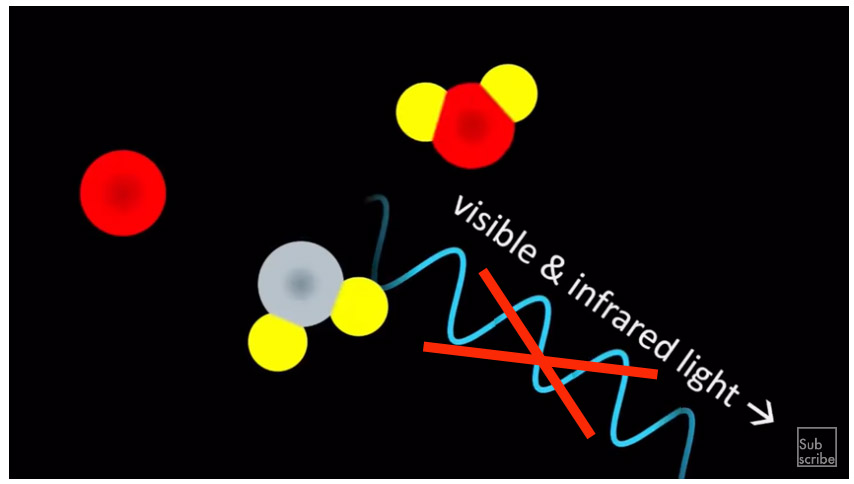


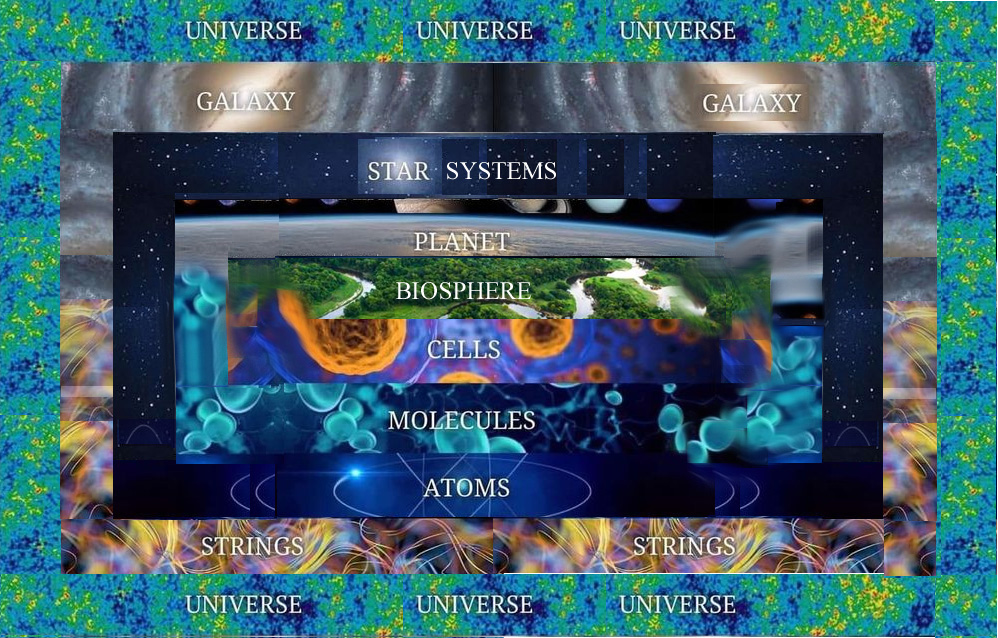



 Multisense Realism
Recent Comments