0:51 What’s down there? 0:54 The laws of fundamental physics, quantum mechanics, 0:57 perhaps string theory below that, 0:59 perhaps a final theory of everything, 1:01 the holy grail of science. 1:04 I see a challenge to this model of how the world works. 1:08 It’s called Strong Emergence. 1:10 And it claims that each level of the hierarchy of the sciences 1:15 from physics to chemistry to biology to psychology 1:18 has its own special laws.
Right away I have problems with the assumptions being made here. Physics, chemistry, and biology may have their own special laws, but they are laws about physical, concrete, tangible phenomena, not feelings, perceptions, ideas etc. In the list “physics to chemistry to biology to psychology” one of these is not like the other. If psychology had laws, they would pertain not to organs, cells, or molecules but to aspects of conscious experience where no tangible object appears at all.
2:40 George, the claim that has been growing is that 2:44 in order to explain how everything works, 2:47 you need this concept of emergence. 2:49 Okay. Well, let’s ask the following question. 2:52 If we knew everything about what was the state of the universe 2:57 at the time of the last scattering 2:59 of the cosmic microwave background of matter. 3:02 Which is basically 14 billion years ago, 3:04 could you predict what you and I are saying 3:07 to each other today from that data? 3:09 Some of the strong physicalists believe that, that would be 3:12 the case and I think it’s absolutely clear that 3:15 there it isn’t remotely possible this would be the case, 3:18 because the fluctuations on the surface of the last scattering, 3:21 if you believe standard cosmology 3:23 or random Garcia fluctuation. 3:25 Now, out of that, emergence has taken place over time 3:28 of animals, of human beings are able to think. 3:33 And human beings then can discuss and produce books 3:36 like Einstein’s Theory of Relativity, 3:39 Darwin’s book on the origin of the species, okay. 3:42 Now, those books contain logical argumentation. 3:47 There is no way that logical argumentation was implied 3:51 in any sense by that data 3:52 on the cosmic microwave background surface. 3:55 Something has happened between there and there 3:57 which has led to that logical argumentation appearing 4:01 in the real world which it has undoubtedly has done. 4:04 On its surface, that’s correct. 4:07 But what I could do is I can throw in an evolutionary picture 4:10 and then it would develop the nervous system and the brain. 4:13 And then you have interactions between brains 4:15 and communities and I can give a story. 4:18 Yes, but the physics does not come into that story, 4:22 in any way, except facilitating what, what — 4:24 you’re bringing in a Darwinian picture. 4:26 No physics book has got Darwin’s law as a law of physics. 4:29 Sure. Sure. 4:30 No physics books has got a law, has got the Hodgkin Huxley 4:34 equations as a law of physics. 4:35 They are imagined. 4:37 But those rules or laws or understandings came out of 4:41 a mechanism of the brain that somebody came up with.
That last line is a good example of how much the idea of emergence is based on circular reasoning. To say that understanding is a mechanism of the brain assumes the conclusion that emergence is supposed to be explaining. We do not actually know that any such mechanism exists in the brain, only that we can see certain correlations between our direct experiences and our perceptions of activity in the brain through imaging devices. Any direction of causation from brain to experience is being inferred by our preference, not compelled by an understanding of how or why experiences emerge from unexperienced brains. The fact that a brain is itself a part of our experience is overlooked, as is the possibility that such images and appearances of brains could be generated by, for, and within conscious experience.
4:44 And in some ultimate analytical sense, you could describe how 4:50 those ideas came, in terms of something in the physical world. 4:53 Unless the claim is that at some levels, there is something 4:59 that is absolutely non-reducible to the physical. 5:03 The claim is that through some of the processes you indicated, 5:08 many of which are not physical, 5:10 although they’re allowed by the physics. 5:11 Brains came into being which are able to carry out 5:14 logical argumentation as an argumentation 5:17 at the psychological level. 5:19 And that argumentation is what leads to, for instance, 5:23 E to the I pi plus one is equal to zero 5:26 being written down on a piece of paper. 5:28 The physics knows absolutely nothing about that. 5:30 You have to have the emergence of the possibility 5:33 of logical argumentation to take place. 5:36 That logical argumentation then has the possibility 5:38 of controlling what appears on the piece– 5:41 So, so, okay. 5:42 But you’re not requiring anything of a non-physical 5:45 nature here at this point, or are you? 5:47 I am. An idea is a non-physical thing. 5:51 An idea is realized in the brain 5:53 but the idea itself is not a physical thing. 5:56 Okay. 5:57 Now everything we see around us here, basically, except for 6:00 the trees was designed by the human mind. 6:03 So, the mind is coarsely effective and thoughts 6:06 are coarsely effective but a thought is not a physical thing. 6:09 It’s realized in a physical way 6:10 but it is not of itself a physical thing.
At this point, I agree with George at least on one thing – that indeed ideas are not physical or reducible to the physical, unless we dilute the term physical so much that it really includes anything and becomes meaningless. I disagree, however with the assertion that “An idea is realized in the brain“. Introducing this term realized carries with it the full weight of physicalist bias, rolling right over the Explanatory Gap and Hard Problem and making the same mistake that Galileo and Locke made by pronouncing physical/extended properties “Primary” and everything else Secondary.
Physically, we see no process of realization, whatever that might mean, inside of the tissues of a brain. We see cells, fluids and molecules moving around. If we use physical instruments to bounce electromagnetic force off of the water in the brain we can read into those movements other geometric patterns of activity, but that activity, as far as science is concerned, is purely quantitative change in the way that charge/polarity is distributed. There’s nothing more likely to emerge from the Magnetic Resonance of water in the brain than any other physical property of any organ. It’s all just visual geometries overlaid onto molecular movements over time.
We now have two filler terms, emergence and realization, to smuggle in unscientific, non-explanatory fictions into physics and conscious experiences that create a false bridge between them, doing unspecified non-physical things in both directions. In reality, we have not established or explained anything, only added abstractions to hide our ignorance and make ourselves feel clever. The explanatory gap remains as dualistic as ever, with Physics, Chemistry, Biology, brains, and ‘realization’ back in the Cartesian Res Extensa realm, and Psychology, ideas, emergence, eiπ +1=0, and logical argumentation firmly in Res Cogitans.
Also mentioned by this point is the seductively innocuous term level: “at the psychological level“, “at some levels, there is something that is absolutely non-reducible to the physical.” This idea of levels is itself completely non-reducible to the physical. It is an idea about our typical ranges of perception. Physical phenomena, if they could exist independently of all detection and perception, would have no levels. Every scale from the Planck to the Cosmological would exist in the same ‘level’ and there would be no other. Physics would not get blurry vision trying to focus on a grain of sand or have to move its head to see all of the Milky Way. Everything would just exist as it is – particles unable to detect each other in any way. Nothing to aggregate or sum instantaneous events into linear time durations. Nothing to make novel geometric wholes appear (invisibly? intangibly?) from scale-dependent perceptual appearances of adjacency of parts. We all know that at the particle scale the ratio of particle to space is incredibly minute, and there is no particular reason to lump those particles together into the shapes that happen to be visible in human perception.
6:13 The idea exists and it has its own validity 6:17 but it is only realized 6:20 because of the physical things going on below? 6:23 I mean, if there’s nothing else. 6:25 Unless you’re saying that the laws of physics, 6:27 when they get to a certain level, create thing that 6:30 in principle can never be understood 6:32 by the microphysics laws. 6:34 Well, it can’t be understood. 6:35 You can’t understand E to the I pie plus one is equal to zero 6:39 in terms of maxual decrays [ph] and interacting electrons. 6:41 I think that’s pretty obvious. 6:43 You can’t understand it at that level. 6:44 You can’t understand that at that level, that’s right. 6:48 But ultimately, that’s the only way it’s realized in terms of– 6:51 No, no. That’s just the way it’s realized, yes. 6:53 So, you’ve got multiple levels. 6:55 You’ve got the atomic level. 6:57 You’ve got the molecular level, you’ve got the systems level. 6:59 All of these are simultaneously causations taking place 7:02 simultaneously, and all of them, in such a way, 7:05 that the logical thing can be worked out. 7:07 But it’s the logic which is driving what happens. 7:10 It’s the physics which enables it to happen 7:12 but the logic is deciding the outcome. 7:15 So, you have what would be downward causation? 7:19 – Downward realization. – Downward realization. 7:22 So, what’s the difference between causation 7:23 and realization? You didn’t like my word causation? 7:25 I’ve been persuaded recently, different from what I’ve written 7:28 about before, that causation is always horizontal. 7:32 Emergence is vertical, and realization is downwards. 7:35 Oh, yeah. That, that I can, I can understand that. 7:38 I’m just trying to think this out, 7:40 get me wherever you want to get me.
In this section, amidst more discussion of levels and realization are more physicalist assumptions that are treated as a priori givens: “But it’s the logic which is driving what happens. It’s the physics which enables it to happen, but the logic is deciding the outcome.” Nobody can claim to know that this is true. We know that when we observe physical phenomena and physical instruments, and then analyze those observations with certain mechanistic modes of sense-making, we can tell causality stories that make sense. We do not, however, know that what we imagine is driving those stories is the only driver of causality, or indeed if it is even correct that it is physical appearances that are doing more enabling than the non-physical appearances. If the universe were nothing but logic and physics, there would not even be a way for any part of such a universe to conceive of any alternative. Logical and physical would describe everything, so the words would be meaningless.
We do not live in a universe like that. In our universe, logic and physics are but a small portion of what we experience. If anything emerges from that, there is so much more of it that it is hard to justify seeing the physical as the realizer and the perceptual as the emergent. Even under physicalism, we literally have no experience of anything other than perceptual phenomena. If the physical objects we perceive exist beyond all perception, we will never be able to access it except as inferences from our intellect (what noumena actually refers to, etymologically).
7:42 Well, what is useful as a computer is an analog 7:46 and when a computer, for instance, sorts a list of names, 7:49 you feed in a program at the top and an algorithm 7:53 is changed down through a series of virtual machines 7:56 to the bottom level, by compilers and interpreters. 7:59 And that’s the machine language at the bottom. 8:01 The machine language does it and then it goes up again 8:03 and what you fed in at the top, results in the list 8:06 being printed out. 8:08 The electrons flowing the gates enable it to happen 8:10 but it’s the algorithm which has decided 8:12 what will, in fact, happen. 8:14 But the algorithm is represented ultimately 8:16 in terms of the transistors and… 8:19 Correct. And at this level, it’s the laws of — 8:22 it’s Maxwell’s equations, and Newton’s equations 8:24 at this level. But at this level, 8:26 it is the logic of the algorithm which is deciding 8:29 what will happen at that level and ultimately, it’s that 8:32 which decides which electrons will flow through 8:35 which gates at the bottom level. 8:36 It’s the top level decides what will be done 8:39 and the lower levels carry out the work.
At this point, the argument really loses all grounding in physics and succumbs entirely to a cartoon workflow from top level non-physical algorithms to bottom level physical semiconductor components and back. All of these claims are false:
“that’s the machine language at the bottom“ “it’s the algorithm which has decided“ “But the algorithm is represented ultimately in terms of the transistors“
Any sort of language is a feature of how we understand and communicate consciously. Physics, if it could exist independently of consciousness, would not need a language, it has fundamental forces and statistically inevitable recombinations to do all of the ‘deciding’. Electromagnetism, not algorithms, are opening or closing gates. Transistors can have no inkling of any grand logic inscribed by human programmers in some non-physical never-never layer. They don’t need logic.
Microphysical behavior is the same regardless of whether or not they are grouped together in some semiotic schema. Those behaviors – which are nothing but the movement of particles relative to each other, do not represent anything. They are not terms in an algorithmic language. The machine components have no access to any other level or layer. Their presence is a purely tangible-haptic geometric-dynamic fact. Not only would other levels have no functional role in influencing electromagnetism, electromagnetism has no physical way to be influenced by them. It’s the interaction problem of Dualism. The only ghosts in the machine that physics allows are physical ghosts like charge, mass, and spin. Nothing physical is summing them up or transforming them into non-physical ‘seemings’.
As far as the connection between Machine language and Machine goes, I have discussed here why it does not survive causal closure, and is in fact just another infinitely broad explanatory gap between abstract logical concepts and concrete physical objects.
8:41 So, let me ask this question. 8:43 We know the H2O is water. 8:45 If I gave you some gas of hydrogen, 8:47 gas of oxygen and hydrogen, could you ever predict 8:50 that if you got a lot of it together, it would be wet? 8:53 No. The answer is no, you can’t. 8:55 This is one of the problems with– 8:57 Okay. So, I think there are people who say that you can. 9:00 Well, alright. Let me, let me– 9:01 Because you — when you know that the angle 9:03 between the hydrogen and the oxygen, 9:05 then you can put a lot together, you can see how they would slip, 9:07 and how wetness could occur. 9:09 There is a great problem in deriving the macro properties 9:12 of waters from the micro properties. 9:13 But let me make the following statement. 9:15 By the time you’ve done that, the hydrogen atom 9:18 no longer exists as a hydrogen atom. 9:20 It only exists as a water molecule. 9:22 So, the lower level no longer exists 9:24 as the individual entities. 9:25 They’ve got incorporated at a higher-level interchange. 9:27 Okay. But if you knew everything about 9:29 the hydrogen and the oxygen you should be able to predict 9:32 the wetness of water if you have it in groups? 9:35 You should. In the case of water, in principle, absolutely. 9:38 You can do that.
This popular example of emergence is another example of circular reasoning fouling up our understanding. What we experience as water has different aspects – in the visible sense, we see images of familiar blue colors, transparency, and shapes like waves and droplets, clouds, mist, etc. In the aural sense, we hear familiar splashing and bubbling, tidal waves crashing, sounds of pouring and spilling onto solid matter. There are flavors and odors that we associate with water also. All of these qualities can and are experienced regularly in ordinary dreams and imagination. If this is water, it is not physical.
H2O refers not to the water that we experience, but to a molecular arrangement that makes sense to us intellectually within the context of chemistry that can be applied to accurately predict and control many of the experiences in our waking consciousness of physical qualities. These are not necessarily different from dream qualities, as dreams can be quite exhaustively realistic, even under deliberate lucid inspection, however we can agree that while we are awake, our experiences of the physical world appear to us to have characteristics that *certainly must* separate it from mere dreams. Of course, during dreams, our waking experience may not be accessible at all, and we often have no way to doubt the reality of the dream, even if the contents appear to be floridly surreal by comparison with typical states of waking experience.
When we think more carefully about the relationship of H2O to wetness, there is nothing that suggests an emergence relationship, or a bottom-top flow of causality or morphology. Wetness is a tactile sensation. It can appear in a dream. H2O is an intellectual concept. It too can appear in a dream. What H2O is supposed to describe, if it could exist independently of consciousness, would not be wet at any scale. It would not constellate into novel geometries of visible appearance or tangible splashiness. H2O refers to a hypothetical, noumenal phenomenon that has no need for levels of emergence or realization, and no physical theory tells us how or why any of that would be physically conjured into existence. Again, the explanatory gap between noumenal molecular objects and any sort of wetness, image, sound, flavor or smell that we call water is infinitely wide. Nothing that happens in a brain sheds any light on this gap. We remain forever on the phenomenal side of it.
9:39 So, the question is, is the water example different 9:41 than your other examples? 9:42 Absolutely, because in the other cases, 9:45 there’s logical stuff going on at that level — 9:48 well, let me go back to that computer example. 9:50 Exactly the same logic gets re-written 9:53 at each of those levels. 9:54 It gets written in Fortran, it gets re-written in Java. 9:57 It’s written in Assembly. 9:58 Gets re-written in machine language. 10:00 And then, it gets incorporated into physical systems. 10:04 The logic is still the thing that is driving everything. 10:08 And the logic does get embodied in the lower level structures, 10:11 they are realizing it, but the thing that is driving it 10:14 is an abstract entity of the logic.Simple vs Weak Emergence 10:18 KUHN: This is Strong Emergence in its full-throated defense. 10:22 George is its apostle. 10:25 And I learned to distinguish Strong Emergence 10:28 from Simple or Weak Emergence. 10:31 The latter is the idea that radically different properties 10:34 in science, can, with deeper knowledge 10:36 of the underlying physics, be explained, 10:39 like the wetness of water. 10:41 Everyone signs on to Simple or Weak Emergence. 10:44 It’s not controversial.What is Strong Emergence 10:48 But Strong Emergence would be an astonishing thing. 10:51 Utterly transformative. 10:53 A new radical way of how the world works. 10:58 Could human logic, 11:00 at the highest macro level in our minds, 11:02 drive the physics at the lowest micro level in our brains? 11:07 Even though human logic itself is composed of nothing 11:10 but that same microphysics in our brains. 11:13 It sounds circular, mysterious, yet I’d be hard pressed 11:18 to name a more axial question in the physical world. 11:23 That’s why I subject Strong Emergence to strong critique 11:27 and here at the Crete conference, 11:29 I have no trouble finding strong critics.
This is a bit of reiteration of the previous examples, which I have addressed already. The logical leap is hidden between these lines:
“9:58 Gets re-written in machine language. 10:00 And then, it gets incorporated into physical systems.“
“Gets incorporated?” How? Physically? This is pure metaphor. The machine language is for our understanding. It has no causal power to manifest electromagnetic changes in a semiconductor. No, the only thing that gets incorporated into physical systems is voltage. Nothing is being written or read, just zapped electrostatically. Human hands are making the hardware that make that happen, not telepathic minds or software language. Nothing is being realized except in our imagination and perception. The emoji is not realized by code, but by a video display and human visual perception.
Moving on to the next interview in the video with David Albert, the assumptions of physicalism are even more explicit. His argument is summed up as follows:
13:29 And yes, I think that a sort of idea that the world 13:34 can potentially be reduced to a set of fundamental mechanical 13:38 phenomena in order to defend the sanctity of human life 13:43 or something like that, the specialness of consciousness, 13:46 the death of this project has been announced. 13:49 And those announcements have always turned out 13:52 to be premature.
This is not a philosophically persuasive argument. As many philosophers have pointed out, using scientific methods designed to specifically disqualify and remove non-physical qualities cannot be expected to have the same validity when deployed against physical phenomena as non- or trans-physical phenomena. It is like someone poking out their eyes and saying that they have been successful in navigating the world ever since using their other senses, so they are sure that color and image will turn out not to be visible either.
The expectation of material science eventually providing reductionistic explanations of immaterial appearances is what I like to call the fallacy of pseudo-credulity. It’s a betrayal of the very scientific spirit that it purports to champion.
In the next interview with Barry Loewer, the position is laid out as follows:
21:57 Strong Emergence says there’s something that happens, 21:59 in some sense, in the physical world, 22:01 that as you go up a level, 22:03 the laws of physics at the lowest levels will, 22:05 in principle, not be able to make that jump 22:08 to that level of biology. 22:11 That is right. I think that the weight of reason 22:14 is on the side of they can make the jump. 22:17 And here’s the reason I’m saying that. 22:19 That if the jump couldn’t be made, 22:21 then there must be some ways in which 22:24 the microphysical world evolves, 22:26 which can’t be accounted for in terms of microphysics. 22:29 And the reason for that is that any change in the world 22:33 at a macroscopic level, let’s say that involved biology 22:36 or psychology, could itself make for a change at the micro level.
Here again psychology is lumped in with physics and biology, completely ignoring the explanatory gap and assuming a difference in degree rather than the difference in kind that we experience directly. There is no level of brain activity that is psychological. Microphysical states cannot be assumed to jump from geometric states of tangible objects/particles to intangible states like percepts or concepts. If such a jump could exist, there is no good reason to justify calling that jump physical.
24:05 I think if causation as just evolving truths like — 24:08 look, if the psychological event hadn’t occurred, 24:12 then the physical event wouldn’t have occurred. 24:14 So, if you hadn’t thought about elephants, 24:17 you wouldn’t have waved your hand like that. 24:19 And there’s also a physical counterfactual. 24:22 If such and such had not gone on in your brain, 24:24 you wouldn’t have waved your hand like that. 24:25 And these are perfectly compatible with each other
The last line here exposes the fallacy. While neurological processes and psychological experiences can seem perfectly compatible with each other, that sense of compatibility is purely psychological, not physical. That’s a problem if we’re asserting physical reduction of causality. We lose the very parsimony that physical reduction explanations require to validate itself.
At the very end, Robert Kuhn at least touches on other possibilities.
25:15 If fundamental physics would be forever not capable 25:18 of explaining biology or psychology or anything else, 25:22 if that reduction could not ever be made, then one must conclude 25:27 that there are mechanisms by which the microworld evolves 25:31 which cannot be accounted for in terms of physics. 25:37 Is this a contradiction? 25:40 Yes, if reality is confined to the physical, 25:44 but there is no contradiction 25:46 if one dares venture beyond the known physical world.
That’s where panpsychism, nondualism and my own multisense realism come in…
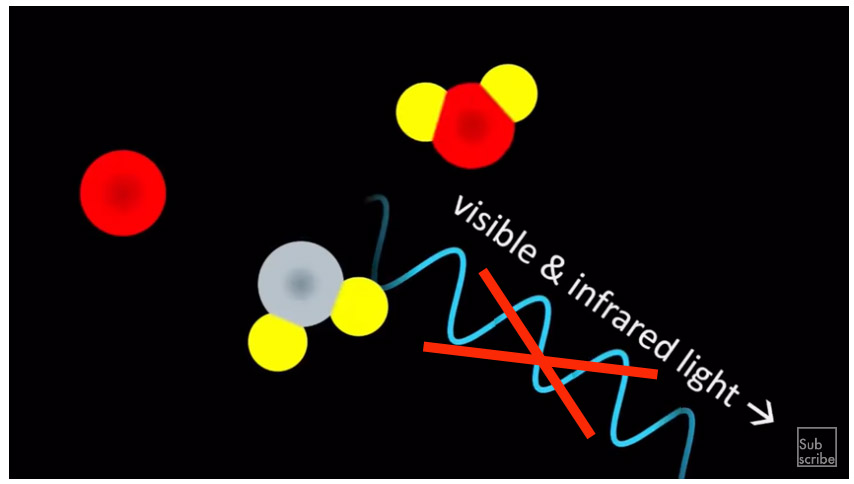
I was thinking about combustion engines and mentally following the sequence from the early step of mixing gasoline with air, then how that mix gets ignited in the gap of the ‘charged’ ends of the spark plug, which then changes the mix into CO2 + H2O steam molecules moving in all directions, only much faster…then those fast moving steam molecules begin to gradually move the dense metal pistons, push the metal gears in the transmission and ultimately rotate the drive train and wheels.
I wanted a video that would show a realistic visualization of combustion at the microstate scale, and this was the closest I could find right now. It’s a good video and I think it works for this, even though I was hoping for more of a scientific CGI simulation than a cartoon.
I’m doing this to help explain my understanding of how the Hard Problem of Consciousness can be transcended using sense-centric model of metaphysics.
Some key points to get from the simple explanation of the video to my Multisense Realism view:
Energy is an abstract concept that stands in for what we would call stimulating feelings or sensations. Stimulating meaning that besides the sensation of kinetic movement that would be assumed under physics (but not defined as a sensation), the event would includes another sensation of desire/motivation (call it motive) to act physically to discharge the quality of that initial feeling, because it is in some sense, uncomfortable or stressful. I propose that is all that ‘energy’ is – a felt sensory-aesthetic quality that causes a motive to experience a complementary sensory-aesthetic quality of release/return by turning the motive affect into motor effect – physical motion. The idea of potential energy is replaced by the more familiar experience of stress/strain and the idea of kinetic energy is replaced by the release of that stress through the physical act of acceleration.
The video does a great job of simplifying the conventional thermodynamic theory with a curve on a graph where potential energy of the fuel molecule decreases as it is transformed into the lower energy (more ‘relaxed’) molecules of water and carbon dioxide plus acceleration and light. In reality, there is no curve of potential energy being lost to kinetic energy. That is an abstraction to help us understand a theory of chemistry rather than a description of the event.
I propose that the actual combustion event needs at least two separate sense modalities to be modeled realistically – two modes of perception analogous to what we experience as touch (tactile/haptic/tangibility) and sight (visibility). First, the tangible sense rendering or appearance consists of molecules moving at one speed colliding and rearranging with each other so that they suddenly move very quickly (accelerate) in all directions. That’s the only truly physical, tangible thing that combustion is doing.*
The second aspect of the combustion event has tangible (photoelectric) effects, however, I propose that the only illuminating aspect is in fact visible rather than tangible. This is a radical proposal – that what we know as vision is not a simulation somehow transduced from information sent physically across a vacuum as particle-wave ‘patterns’, but is its own direct ontological medium that exists prior to biology, and perhaps even prior to tangibility. It may be the case that physics is grounded in metaphysical phenomena that are more like visual experiences than tangible experiences.
In the video, we see that part of the combustion of fuel into water and CO2 is the emission of what we conceive as light or photons. As I have proposed in other writings, light may not exist in any tangible sense, although it causes tangible effects (motion of atoms). I’m not denying that photons could exist as standalone particle/waves in a vacuum, but I think given what we observe from QM experiments and from our own experience of sight as a sense of looking and seeing rather than purely a sense of tangible collisions in the back of our eyeballs, I think it makes more sense to understand photons as either intangible sense experience or semi-tangible vehicles of trans-tangible sense experience. Illumination may be a more fundamental sense interaction than touch, so that the sense of objects are more of a collapsed reduction of some aspects of sensory-motive changes that cannot be seen directly.
By trans-tangible I mean that the ability to see brightness, colors, and images made of those contrasting visible qualities is not an ability that objects/particles or waves could generate under our current physical theory. There is an Explanatory Gap between what we think we know about mechanical events of force and what we experience directly as seeing/sight/sights/visibility. That is a How question. There is also a Hard Problem of Consciousness that arises when we ask the question of Why there would be any such thing as visible qualities in the first place when the mechanical consequences of physical events like combustion would produce the identical functions in complete invisibility. As an example, you can unplug the screen of your computer and nothing important is going to change in the circuits of the device. The device could do exactly what it was doing before, even though the main reason you have for making it do anything is to generate some non-computational physical activity in the lcd screen you’re staring at.
As long as the photon moves the electron, (or in some sense IS the motion of the electron) at a distance, then there’s no parsimonious reason to add an additional thing that the universe does to give it an ‘appearance’, much less an appearance that is presented visually rather than haptically. In a purely physical universe, nothing would have an appearance, nor would an appearance change anything physically. In a physical universe-plus-appearance, the appearance would by default be tactile/haptic and not visual. A brain would not see a world of images, it would just process the chemistry of its own fluids as it is, or with a lower resolution miniaturization of what it is.
For example, a grain of salt is an object appearance that approximates billions of molecules, so it is a low res icon that could be weakly emergent if sensed as a single tangible shape colliding with tongue cells, but to suddenly have that shape become an image of colors and brightness, or of flavor requires some strongly emergent non-physical magic. Magic because it’s not parsimonious. It doesn’t follow logically that any such thing would appear in a physical universe.
Most people currently assume that natural selection can and does produce mutations of physical cells that end up conjuring such appearances as sights and flavors, but in all cases that assume is a logical fallacy – a petitio principii or Begging the Question fallacy where the fact of the experience of sight is retrospectively smuggled in to what is supposed to be an explanation for how that experience came to be in the first place.
We can’t really see an electron or a photon, and we can’t really detect one without using our own conscious observation of how a physical instrument changes physically. This means that photons and electrons could be more like sensations that change the movements of atoms rather than free-standing physical entities in a vacuum. Photons in particular may just be how seeing or sensing appears when we look at it with something that we assume does not see (a physical instrument like a photomultiplier).
The whole notion of quantized energy states and electrons moving from inner to outer shells may be more of a story we made up about the behavior of the instruments we are using, and the modalities of sense and sense-making we are using them with than a realistic understanding of the fabric of all of nature. My proposal is that the fabric of nature is appearance itself: aesthetic presentations of multiple sense modalities, including, but not limited to, sights, sounds, feelings, thoughts, haptic/tactile textures and objects, emotions, even people. The presentation of aesthetic appearance on different nested scales of time or significance replaces the assumed anesthetic mechanics of physics or computation, and the presentation of the aesthetics of participation/voluntary will replaces the assumed automaticity of mass-energy or information processing.
Instead of literal light waves traveling as independent entities in the vacuum of space, my hypothesis suggests more of a Wheeler-Feynman Absorber Theory, but replacing anesthetic-automatic events of mere geometric emission and absorption with a Multisense Realism Theory of shared sensory-motive experiences of giving and receiving experiential qualities. Not only is illumination an experience of visible aesthetic qualities, but I am proposing that those aesthetic qualities are isomorphic to, or recapitulate the original experience of the event at the source to some degree.
In the Multisense Realism view of combustion, the idea of a subatomic particle leaving an atom and joining another is replaced by the idea of atomic scale experiences sharing a contagious sense of oscillating excitement-relaxation among existing conscious experiences. We render these experiences as movements of atoms only when we are using tangible instruments to detect their tangible side effects. Otherwise these events can be rendered in any modality – feelings, thoughts, flavors, colors, etc. There is no thing-that-is “light” other than the shared experience of illumination. Further, the experience of illumination is not only the wedding of separated experiences of generic stimulation through the sending and receiving of a sensation, but it is an experience of awareness of some aspect of the nature of that experience as it relates to all other experiences. Illumination is not only an increase in the visible quality of brightness, but within that brightness is a record OF the event that caused it. Light/illumination can be informative but it is not mere information. It is not just generic ‘news’ or signal but it news-OF an aesthetic-participatory event that is recapitulated aesthetically. A presentation that can re-present itself to itself, aka a form of consciousness.
*That’s the only thing that metabolism is doing also – in the stomach, in the blood, even in the brain. There is no standalone thing that is ‘energy’ in the universe. Energy is whatever quality of sensation that stimulates a desire to change or spread that sensation. It’s not a generic thing, but it can be modeled that way, quantified and understood enough to exert control over physical and chemical reactions.
Great video Matthew. I agree mostly, but I don’t think that we need to conclude that linear time is (only) an 𝙞𝙡𝙡𝙪𝙨𝙞𝙤𝙣, any more than we can conclude that photons are 𝒏𝒐𝒕 an illusion.
I see illusion itself as more illusory, a function of the perceptual sense of realism which is a hierarchical, power-law relation across multiple modes and scales of perceptual access.
For example, in the perceptual reality of all small flying insects such as a mosquito, the surface tension of water allows one to stand on top of a pond. The world at that scale is just a different world than it is at the scale of a human body.
I propose that in addition to having access to different qualities of the exterior (seeming) world by virtue of that world’s body size scale differences, mosquito experience also likely includes access to a corresponding set of interior (seeming) features (such as sensory and perceptual qualities) that human experience does not. The mosquito may not experience the world in anything like the stunning degree of aesthetic richness that human consciousness affords.
The mosquito’s life may be devoid of deep pain and pleasure as we know them, of a sense of self as separate from all of mosquito-kind, etc. It’s a different game of life at that scale – possibly more about geometry of feelings rather than the geometry of crystal clear objects we can touch and see with human scale sense.
Our scope of access changes as we grow and age, but also remains the same as far as it remains the experience of an individual human being, which is divided out of a larger collective experience of family, species, order, class, phylum, kingdom, etc. I propose that experience goes beyond biological kingdoms even, and into geo-chemical and astro-nuclear scales of 𝒓𝒆𝒍𝒂𝒕𝒊𝒗𝒆 size and relative sample frequency rate.
It makes sense to me that because perception or consciousness is necessarily and literally 𝙜𝙧𝙚𝙖𝙩𝙚𝙧 than reality, and includes sole access to all facts and fictions, facts are literally a localized/localizing subset of universal fiction rather than the other way around.
What we perceive to be stable facts (and which 𝙖𝙧𝙚 stable facts 𝙛𝙧𝙤𝙢 𝙤𝙪𝙧 𝙥𝙚𝙧𝙨𝙥𝙚𝙘𝙩𝙞𝙫𝙚, physical constants etc,) can be understood as established, ongoing fact-fiction experiences of a greater or lesser scale of significance than our own ongoing fact-fictions.
I propose that the relation of the scales of significance are the basis of the perceptual quality of realism, as well as gravity, both of which are the same power law relation of universal perception only interiorized and exterioirzed respectively.
We can have dreams that are more realistic or less realistic than our waking experience, but within any given dream or period of waking awareness, we can accept any degree of strangeness and surreality as factual reality. Only the experience of waking up, which is a perceptual shift in perceptual context, can change the relations to cast one set of experiences as dream and another as reality.
If you never wake up from a dream, that dream is your real life. The only difference is that real life is a dream that shares more context of common sense (sense that is literally common across more relative scales and sample rate frequencies, modalities, and quantities of individualized experiences).
When we look at the telescopic view of the universe, we see stars and galaxies. I’ll call this the astro-nuclear domain or scale. In that domain, what we can see of a planet is not the planet itself but the planet’s ability to reflect starlight. Even then, we can only see the closest few.
All of the phenomena that we can see on this scale are explained by the most primitive forms of chemistry – of atoms, electrons, and photons.
The largest (astro) and smallest (nuclear) scales define each other as the outer envelope of our tangible frame of reference. Within that envelope, these scales are not polarized. They are the same phenomenon. It is our perception, coming from a perspective and sample rate enveloped multiple times toward the center of the continuum between the astro and nuclear scales, that perceive a distinction between atoms and stars. From a scale invariant perspective – they are the same thing. Stars make atoms, atoms make stars. Solar systems are like giant atoms, atoms are like tiny solar systems. This could be considered a causally closed system, and without senses that go beyond the electromagnetic spectrum, the possibility of the existence of planets and their geochemical scale elaborations would remain forever inaccessible.
Great stuff from Wai H. Tsang. I’m about halfway through listening to this talk. Here are my comments:
I propose an additional clarification that the fractal, cyclical, and mathematical properties of the Totality are aspects of the Diffraction process or Diversification of the Unity into Universe.
My point in the comparison image is that I think that purpose – the participatory aspect of the Totality in general is not part of mathematics, fractals, etc. To the contrary, counting, and by extension math, computation, geometry, physics are passive instruments of purpose.
Specific purposes are clothed in algorithmic-geometric form, however only as a vehicle for expression of the true Unity of the Totality, which is more like the inversion of mathematics.
I was also inspired by Wai’s discussion and inclusion of this image. Talking about a teleological universe in which a retrocausal attractor is pulling us toward the originating singularity. I agree but to clarify, only in the Uni/Holos sense and not in the Verse/Graphos sense.
It’s complicated but…mortality is like a bubble of conscious perception within the Totality of conscious perception. The perception of the Totality from within that bubble varies from states of transparency, translucence, reflection, refraction, diffraction, and opacity to the Totality.
It’s a focus thing. As we change our focus (or our focus is changed for us), sensitivity to the Totality can be increased so that the self identifies with the Totality and sees no separation. This is profound and true, however, while consciousness is conditioned with mortality, the loss of separation is akin to mania/psychosis. The idealist is correct in the ultimate sense, but impractical and deluded from the mortality-dominated perspective.
As awareness contracts, focus shifts from the Totality to the Locality, and then to the bubble itself – the separation. It’s complicated because I think that what Wai and others are on to is a Unity of Graphos rather than Holos. All separations use similar schemas, but that similarity itself is maximally dissimilar to the true Holos/Absolute/Totality, which we experience mentally as imagination, perceptually as qualia, emotionally as love, somatically as pleasure, egotistically as success, etc. Physicality and mathematics are inversions of sensitivity…they are the concrete and abstract qualia of quanta.
We don’t need to think of energy or mass as identical to light. I propose that there is no ‘light’ as a noun but ‘illumination’ as an event with properties that are likely actually primarily visible but also cross over into the tactile-tangible.
When we use a tangible apparatus as an instrument, we are not necessarily measuring the most important or defining aspect of illumination, but rather we are overlooking it completely. By limiting our inquiry to how physical objects behave when illuminated, we make a misguided assumption based on another presumption of the supremacy of tangibility. When we use something like a photomultiplier, we get a tangible effect that is really only a small part of the story, and not the important part.
“Energy” and “mass” are entirely reducible to a geometry of motion of tangible objects. Energy and mass are abstract theoretical entities of measurement that we use to explain why objects move and change their motion/shape/state in the way that they do. These geometric-tangible properties are posited from a hypothetical experience of sightless space and time, again, overlooking completely what illumination is to us and likely to all other organisms with eyes… which is a completely intangible aesthetic of color and image.
Notice that sound is not completely intangible. We can feel body parts vibrating from sound. Light has some tactile qualities – the light can ‘hurt your eyes’, but you can’t feel waves or particles colliding with anything. This might be just because the scale of light is so much smaller, but remember, studies have shown that people can detect single photons.
All this to say that I propose the possibility that there never were any literal light waves or particles – no massless photons literally traveling through empty vacuum, only a misguided inference based on prioritizing the sense of touch rather than the experience of sight. I think that sight should be explored as a direct receptivity of conscious experience across distance rather than some abstract confabulation of brain tissue in the dark. What is particulate or waving about physical ‘light’ is the behavior of tangible instruments when illuminated (electromagnetically stimulated), not illumination itself.
My view has developed along similar lines as Donald Hoffman’s. One important difference is that I take his observation about the world we perceive being a sensory desktop or data structure contrived from fitness payoffs a step further. I plug that observation back in to itself, so that the expectation of data structures and fitness payoffs are also part of how we are using a sensory desktop.
In other words, after we understand how survival of a tangible, mortal body shapes our entire perception, we can see that this understanding is also biased and contrived by the particular modes of sense and sense making that have evolved since the Early Modern Period.
This means that the desktop we experience is different from the unimaginable ‘real world’ not because it is fabricated but because tangibility is only one aspect of ‘world realization’, and even the unimaginable ‘real world’ is actually only another level and scale of the same sense desktop. Yes, human perception has been shaped by fitness payoffs from animal mortality, and that has been supercharged in the centuries since Galileo and Descartes, but that doesn’t mean that perception in general is shaped ONLY by those anthropological>zoological>biological fitness payoffs, and that does not mean that sense experience itself (sensation>feeling>perception>awareness>personal consciousness) arises FROM fitness payoffs.
If my view is on the right track, it’s *all* a desktop, and there is nothing that can ever exist which is not a ‘user interface’, even if the ‘user’ is a sub-personal or impersonal frame of perception, i.e. a pre-physical sensory-motive event. So yes, I think that our movie is directed by evolution (as presented in our desktop of tangibility/causality/realism/mortality), however even the director’s world that our movie fictionalizes is itself nothing but the larger, older movies that we currently use as a movie *theater* (physics, information).
On the largest scales, space and time define each other relativistically.
On the middle scale, space and time are perpendicular.
On the smallest scales, space and time do not exist together and can only be measured as one or the other.
That space and time are radically different on different scales is more important and more revealing than anything we can derive by making any one of the three the ‘real’ space/time.
Each of the three levels tell us about all of the levels. All experiences are probabilistic-automatic, dualistic-participatory, and synchronistic-teleological, depending on how we invest our attention, and how attention is invested in us.
Emergent properties can only exist within conscious experience.
…
Neither matter nor information can ‘seem to be’ anything. They are what they are.
It makes more sense that existence itself is an irreducibly sensory-motive phenomenon – an aesthetic presentation with scale-dependent anesthetic appearances rather than a mass-energetic structure or information processing function. Instead of consciousness (c) arising as an unexplained addition to an unconscious, non-experienced universe (u) of matter and information (mi), material and informative appearances arise as from the spatiotemporal nesting (dt) of conscious experiences that make up the universe.
Materialism: c = u(mdt) + c
Computationalism: c = u(idt) + c
Multisense Realism: u(midt) = c(c)/~!c.
For all dangerous minds, your own, or ours, but not the tv shows'... ... ... ... ... ... ... How to hack human consciousness, How to defend against human-hackers, and anything in between... ... ... ... ... ...this may be regarded as a sort of dialogue for peace and plenty for a hungry planet, with no one left behind, ever... ... ... ... please note: It may behoove you more to try to prove to yourselves how we may really be a time-traveler, than to try to disprove it... ... ... ... ... ... ...Enjoy!


 Multisense Realism
Recent Comments